Practical Human Factors
Our Mission: To enhance aviation safety and performance by translating complex human factors research into actionable insights for the general aviation pilot.
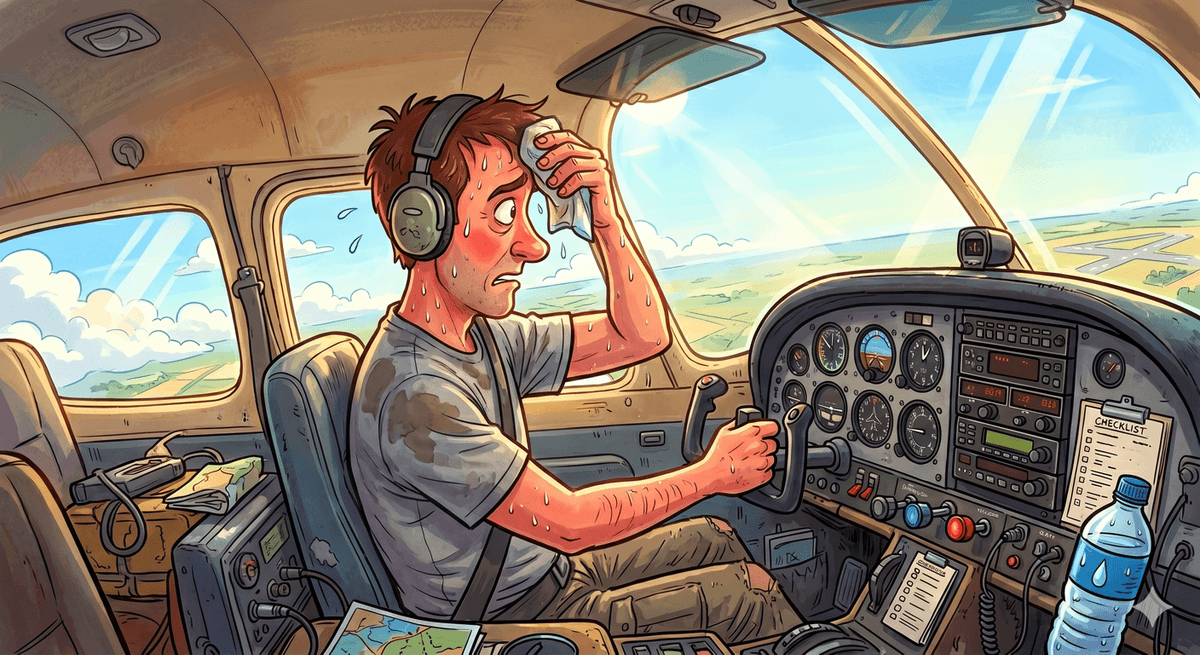
Hot Cockpit, Slower Mind: The Effects of Heat on PilotAs the summer sun settles in and temperatures climb, flying can take on a whole new kind of challenge—one that’s easy to underestimate. It’s not just about sweating it out in a warm cockpit. The real story begins well before takeoff, during those ramp activities like pulling the airplane out, fueling up, running through a preflight, and loading baggage. By the time we’re strapped in and ready to go, our bodies may already be working harder than we realize.
What’s happening behind the scenes is worth paying attention to. When we’re exposed to heat, our bodies start working overtime to keep things stable. Sweating helps cool us down, but it also drains fluids. Meanwhile, heart rates tick up as the body tries to move heat away from vital areas. Over time—especially on longer flights—this adds up. Tasks that normally feel routine can begin to feel just a bit more demanding, and that subtle shift can creep in faster than we’d expect.
The tricky part is that the early warning signs don’t always scream for attention. We might notice we’re a little thirstier than usual, maybe dealing with a dull headache, or feeling slightly fatigued or lightheaded. Sometimes it shows up as difficulty concentrating—that fuzzy “brain fog” feeling. These aren’t dramatic symptoms, but they’re the body’s way of signaling that it’s under stress. If we let them go too long, they can escalate into something more serious, like heat exhaustion, bringing nausea, rapid breathing, or even fainting into the picture.
For pilots, even mild symptoms matter. Heat doesn’t just affect comfort—it can chip away at performance. Things like coordination, reaction time, and decision-making can all take a hit. We might find ourselves rechecking a checklist more than usual, scanning less effectively, or reacting a bit slower than normal. These small changes can become especially critical during high-workload phases like approach and landing, where precision and timing are everything.
One of the biggest misconceptions is relying on thirst as a guide. By the time we feel thirsty, dehydration may already be setting in enough to affect performance. Add in factors like direct sunlight, limited airflow in the cockpit, and even what we’re wearing, and it’s easy to see how a “slightly warm” start can turn into noticeable fatigue by the end of a flight.
It helps to stay alert for subtle in-flight cues. Increasing irritability, slower thinking, or having to reread checklist items can all be signs that heat is starting to interfere. Feeling lightheaded during maneuvers or developing a headache while sweating more than usual are also worth paying attention to. If symptoms escalate to nausea or confusion, that’s a strong signal that the situation needs immediate attention—reducing workload and reassessing the plan becomes essential.
The biggest takeaway here is that heat is often a gradual threat. It doesn’t arrive with flashing lights or obvious alarms. Instead, it quietly wears down performance over time. That’s what makes it so important for all of us to recognize the signs early and stay proactive.
At the end of the day, staying safe in the summer heat comes down to awareness and preparation. Understanding how our bodies respond, keeping hydrated, and checking in with how we feel throughout a flight can make all the difference. Because when it comes to flying, staying cool isn’t just about comfort—it’s about staying sharp where it matters most.
Situational Awareness - A Deeper Look
Two-Part Series
It's more than knowing what is going on around us.

We've all been told...
...by instructors, seasoned pilots, and safety presenters—how essential situational awareness (SA) is. Yet very few of us have ever had someone clearly explain what SA actually is or how tostrengthen it. For most pilots, that explanation simply never happens.
Visual Scanning
Eyes on the Horizon: The Science and Art of the Visual Scan
For a general aviation pilot, the cockpit is a place of freedom, but itis also a high-stakes environment where the "See and Avoid" doctrine
is the primary line of defense.