
Coming in January 2027!
Landings Masterclass Online. This extensive, recurrent training program targets advanced landing proficiency for general aviation pilots. Learn at your own pace. Complete the entire program including quizzes and final exam to earn five Wings credits or simply choose modules of interest to you, skip the quizzes and exam, and still have a valuable learning experience. Either way, it is free courtesy of Avemco Insurance! More information coming soon!
Important Safety Alert: GA Seat Restraints
The NTSB has just released a new Safety Alert, SA-108 Seat Restraints. None of us expect to have an accident. But if it happens, the difference between walking away and suffering life-changing injuries or death is often determined by the seat restraints in use and their condition. I highly recommend all pilots read SA-108.
New "Old Pilot Tips" "Float on Landing"
This 58-second video explains the most common cause of runway float, the risks associated with an extended float during landing, and the most effective way to prevent it. Episode #45 of our "Old Pilot Tips" series Sponsored by Avemco Insurance. Click here to watch ad free!
Holiday Season is Near!
We never seem to escape a year in which a serious accident catastrophically and needlessly impacts a family. Our video, sponsored by Avemco Insurance, addresses some of the common factors that relate to these accidents and of course provides some mitigation strategies. Click here to view the video "Avoiding Holiday Travel Hazards" on YouTube.
Book Your Free Virtual Safety Seminar
Whether your pilot group meets all together, virtually, or hybrid, you can schedule a program, valid for FAA Wings credit, free-of-charge courtesy of Avemco Insurance. Programs are live with Gene Benson and always include a Q&A session at the end. Click here to download our presentation catalog. For more info or to schedule, contact gene@genebenson.com.


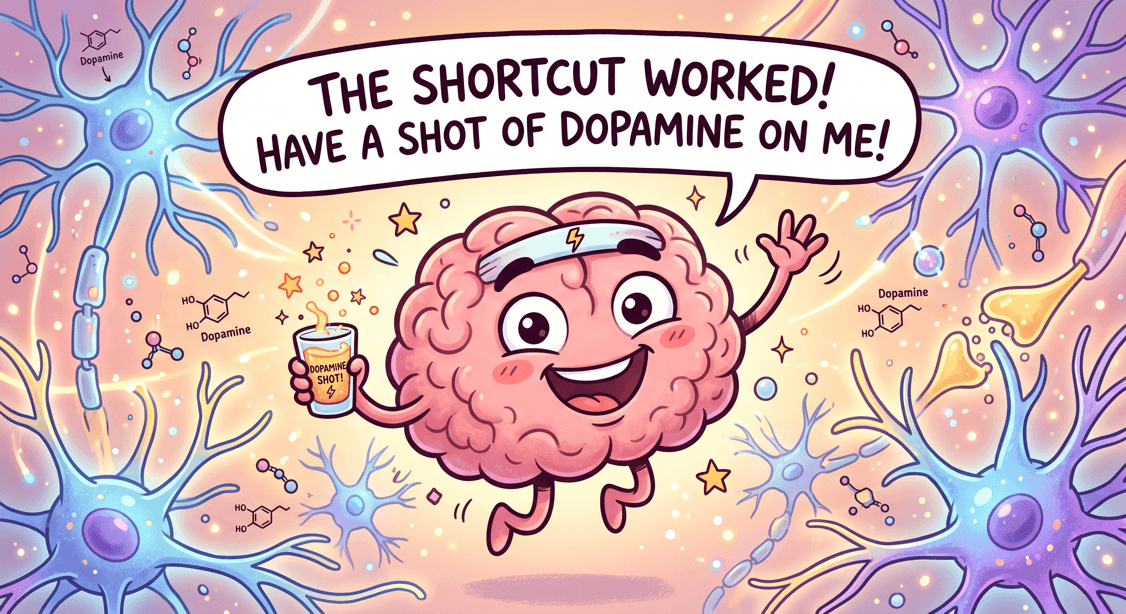
Heuristic Development
Human brains evolved primarily as energy-preservation machines, constantly seeking the path of least resistance to conserve metabolic resources while maximizing rewards.
Cognitive Energy Conservation
The prefrontal cortex (PFC) manages deliberate focus, working memory, and strict adherence to multi-step instructions. However, processing detailed procedures is metabolically expensive, burning significant amounts of glucose and oxygen. To conserve energy, the brain naturally seeks opportunities to suppress PFC activity whenever a task feels predictable.
Dual-Process Shift (System 1 vs. System 2)
● System 2 (Analytical): Active when learning a procedure. It operates slowly, requires conscious effort, and monitors compliance step-by-step.
● System 1 (Automatic): Takes over as familiarity grows. Driven by heuristics (mental rules of thumb), System 1 actively skips steps it perceives as non-essential to complete the task faster and with less mental strain.
Automation via the Basal Ganglia
Repeated tasks shift operational control from the prefrontal cortex to the basal ganglia, the region governing habits and procedural memory. The brain "chunks" individual steps into a single fluid action. Once an action becomes an automated habit, the brain stops actively deliberating on individual rules, making strict adherence feel unnatural and overly restrictive.
Dopaminergic Reinforcement
The brain’s reward circuit—specifically the nucleus accumbens and ventral tegmental area—releases dopamine upon task completion, especially when achieved quickly or efficiently.
● Saving time delivers a micro-dose of dopamine.
● If a skipped step yields no immediate negative consequence, the reward pathway reinforces the shortcut, signaling to the brain that the workaround is superior to the formal rule.
Predictive Processing & Risk Adaptation
The brain functions as a prediction engine. When a shortcut is taken and no bad outcome occurs, the brain updates its predictive model, lowering its perception of risk. This neural adaptation (often referred to culturally as the "normalization of deviance") rewires the brain to view safety or quality checks as redundant noise rather than vital steps.
Want to learn more about cognitive science and how it applies to the general aviation pilot? Check out our "Squawking Human" feature!

Procedures, Procedures, and More Procedures
Challenge any pilot to see how many established procedures they can name in 15 seconds. The quantity will vary, but I guarantee that no pilot will run out of procedures to name before the 15 seconds expires.
Checklists, callouts, briefings, approaches, emergency procedures, and operating limitations seem endless. That prompts an obvious question: Why are there so many?
Most instructors will tell you that procedures are "written in blood." They exist because someone, somewhere, learned a costly lesson about what happens when a critical step is skipped. Procedures are designed to prevent accidents, reduce risk, and create consistency. We teach students that they are important and that they should be followed every time.
Yet accident reports routinely reveal experienced pilots and instructors deviating from established procedures. How does that happen? Are they hypocrites? Usually not. More often, they are simply human.
A perceived operational need prompts a small deviation from a procedure. If nothing bad happens, the behavior has been reinforced and is likely to be repeated, possibly with a larger deviation. There are several names for this such as procedural drift, operational drift, and normalization of deviance.
I wish I could provide a foolproof way to avoid falling into this trap. Even if I could, it would simply be another procedure to be violated when it was convenient. Instead, I will tell you a personal story that has helped me remain true to established procedures for the remainder of my flying career. I am not saying that I am perfect and never deviated from a procedure, but the experience I will share kept me mostly coloring within the lines.
The year was 1979. By day I taught at an aviation college. During my off hours I flew charter flights. At the time I was preparing for a Part 135 checkride in a Piper Navajo Chieftain, and I had been assigned an FAA inspector with a legendary reputation for being tough.
His failure rate was the subject of hangar talk, and he had accumulated several colorful nicknames, none suitable for publication.
Determined to survive the ordeal, I prepared relentlessly. I studied the aircraft manual, regulations, instrument procedures, local approaches, and anything else I thought might appear on the exam. On checkride day I arrived early with a polished airplane, immaculate records, and enough Jeppesen binders to qualify as excess baggage.
The inspector greeted me with a simple instruction:
"Follow me."
No smile. No small talk.
Just those two words and a long walk to a windowless conference room.
He spent what seemed like hours silently going through the aircraft logs and my logbook. Apparently dissatisfied that he could not find any reason to disqualify me quickly, he began to examine me on all the required items for the oral portion of the checkride. He then gave me a route and instructed me to file an IFR flight plan of three legs, ending back out our departure airport.
I was sure I detected a disappointed sigh as he instructed me to go out to the airplane and perform a preflight inspection. The very thorough exam continued as he quizzed me as we made our way around the airplane. Seemingly disappointed at being unable to find a reason to avoid flying, he directed me into the airplane.
I meticulously followed every checklist item. After takeoff he really challenged me with frequent changes in routing, multiple simultaneous simulated malfunctions, and every other seemingly diabolical thing he could conjure. Throughout the checkride he feverishly made notes which I was sure I would get to see on the pink slip at the conclusion of the checkride.
We returned to the airport and taxied to the FSDO ramp where he simply said, “Secure the airplane an come inside.” I steeled myself for the berating that I was sure would follow. Contrary to my expectations, I was greeted just inside the FSDO door by my tormentor who was now presenting a smile. The human mind does not respond well to sudden contradictions to our expectations, so I am sure I reacted strangely as he ushered me into the same small conference room and directed me to take a seat. His smile continued as he complimented me on an excellent checkride and proceeded to complete the requisite paperwork. He then gave me some advice that I have carried with me throughout my career. He explained that he knew about his reputation and that because of that I had arrived thoroughly prepared for the checkride and was careful to follow all standard procedures. He told me to always conduct my flights as if he was looking over my shoulder and that I would have a good, safe career.
Looking back, I cannot honestly claim that I have never been tempted and never succumbed to temptation to take a shortcut. Every pilot has moments when convenience argues against discipline. But the number of times that I heard that voice and did not deviate from a procedure far outnumber the times that I did.

Accidents discussed in this section are presented in the hope that pilots can learn from the misfortune of others and perhaps avoid an accident. It is easy to read an accident report and dismiss the cause as carelessness or as a dumb mistake. But let's remember that the accident pilot did not get up in the morning and say, "Gee, I think I'll go have an accident today." Nearly all pilots believe that they are safe. Honest introspection frequently reveals that on some occasion, we might have traveled down that same accident path.
Our topic for this month is all about following procedures and the bad things that can happen we deviate from established procedures. In a break from our usual format, I will begin by listing the NTSB's probable cause for a fatal crash involving a Cessna 182. It states, "The pilot’s delayed decision to go around after descending below the recommended abort altitude with a slight tailwind and an over-gross-weight airplane, which resulted in impact with trees and terrain. Contributing to the accident was the pilot’s failure to follow the published guidance for airport operations."
That probable cause finding essentially tells us all we need to know, but I will provide the important details.

NTSB Supplied Photo
The crash occurred in Idaho in June 2024. The 63-year-old, 900-hour private pilot was killed and his pilot-rated passenger was seriously injured. The airport was challenging as evidenced by the Idaho Division of Airports multipage publication on special airport procedures.

Big Creek SOP (Click here to download the SOP in PDF format.) (Source: NTSB Accident Docket)
The pilot failed to follow the established procedures, mainly in descending below the recommended abort altitude. The NTSB report includes the following: "After reviewing a standard operating procedures (SOP) guide for the airport, which strongly recommended an airport checkout, the pilot and the pilot-rated passenger entered the traffic pattern to land at the back country turf landing strip in the slightly over-gross-weight airplane with a slight tailwind. While on the downwind leg, the pilot used a higher-than-recommended traffic pattern altitude and turned to the base leg earlier than published recommendations. The pilot then maneuvered to make the runway while the concerned pilot-rated passenger asked him if he was going to go around. The pilot continued the approach and, after flying over most of the runway, initiated a go around at an altitude below the recommended abort altitude specified in the SOP; at the lowest point of its approach, the airplane was about 10 to 30 ft above ground level (agl). According to the SOP, “Abort altitudes may vary for every type of aircraft and situation. 200-300 ft AFE [agl] is a good altitude for most aircraft.”

Big Creek Airport (Google Earth)
The NTSB report also includes: "During the go-around, the pilot applied power and maneuvered to avoid obstacles; however, the airplane impacted trees and terrain about 1,500 ft southeast of the departure end of the runway. During the go-around, the pilot varied the flap position in a method not detailed in the owner’s manual; benefits of this technique could not be determined by the available data. Engine data monitor (EDM) data indicated that during the go-around, the engine’s speed did not increase to the maximum rpm, despite the maximum manifold pressure being used, which suggests the adjustable propeller may have remained set at a higher-than-desired pitch angle."
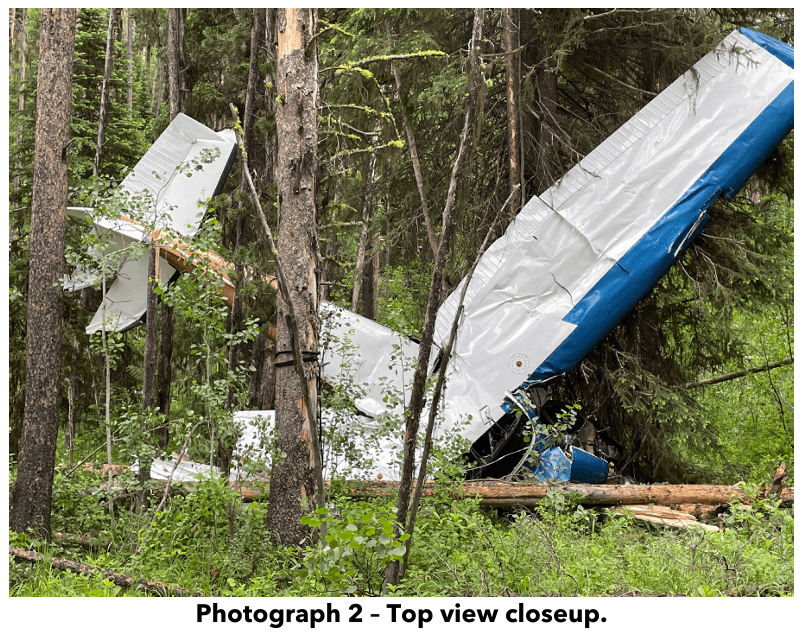
Photo Source: NTSB
The apparent failure to adjust the prop control for the go-around is another example of failure to follow established procedures. And other instances of failure to follow procedures are flying an overweight airplane and not flying a stabilized approach.
We should all realize that established procedures exist for a reason, which often means people have died. Shortcutting procedures is never a good idea, but violating procedures when going into an airport in a mountainous region is, well I best not express my opinion in print.
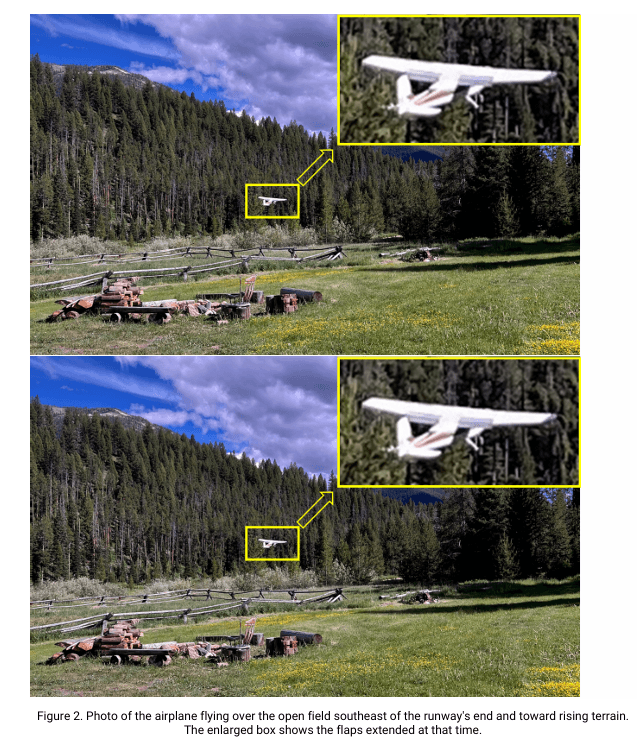
Graphic Source: NTSB
Click here to download the accident report from the NTSB website.
Accidents discussed in this section are presented in the hope that pilots can learn from the misfortune of others and perhaps avoid an accident. It is easy to read an accident report and dismiss the cause as carelessness or as a dumb mistake. But let's remember that the accident pilot did not get up in the morning and say, "Gee, I think I'll go have an accident today." Nearly all pilots believe that they are safe. Honest introspection frequently reveals that on some occasion, we might have traveled down that same accident path.
This crash involved a Piper PA 46-350P and occurred in New Mexico in October 2022. Neither the 69-year-old, 4946-hour private pilot nor his passenger were injured. The airplane was substantially damaged.
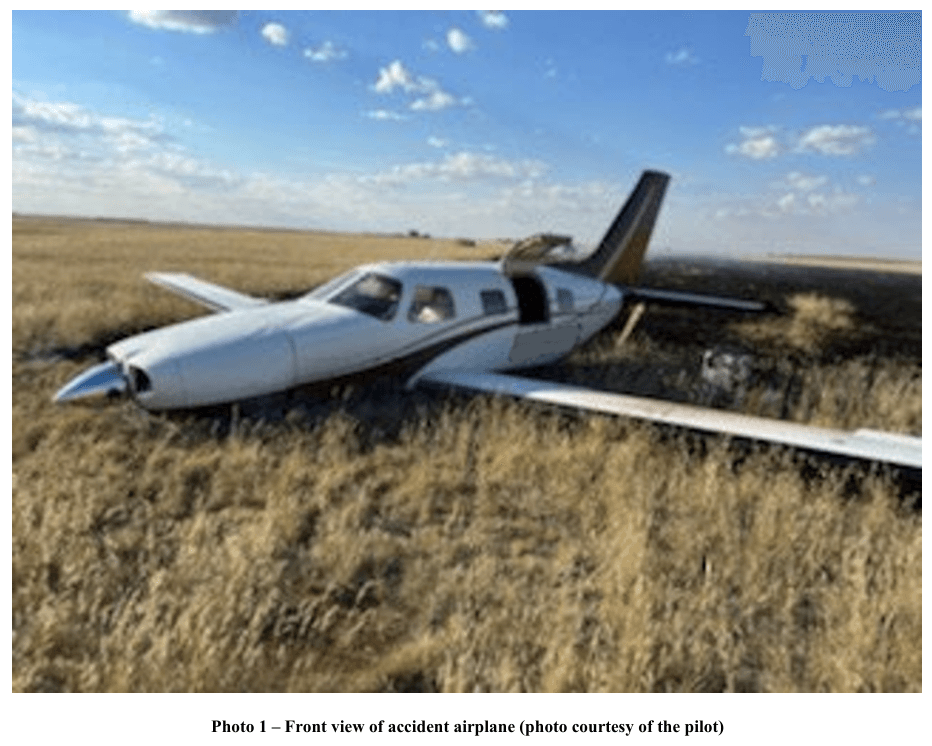
NTSB Supplied Photo
The NTSB accident report states: "As the pilot approached the destination airport, the wind was reported as light and variable. He stated that as he flew the visual approach to runway 4 and prepared to land, he encountered a major gust of wind and elected to perform a go-around. The pilot reported that he applied full engine power, retracted the landing gear and flaps, and initiated a climb when the “stall shaker started shaking”. The pilot lowered the nose to prevent the airplane from stalling and initiated a gear-up landing to an open field adjacent to the runway."

Clovis Regional Airport (Google Earth)
The NTSB report continues: "The pilot reported encountering a gust of wind; however, the wind reported at the airport 4 minutes before the accident was from 180 ° at 11 knots. The wind reported about an hour after the accident was from 160° at 10 knots. Neither weather report indicated wind gusts or significant changes in wind direction. The calculated crosswind component at the time of the accident was about 7 knots, with a tailwind of about 8 knots. Postaccident examination of the airplane revealed no preaccident mechanical failures or malfunctions with the airplane that would have precluded normal operation."

NTSB Supplied Photo
The NTSB probable cause states: "The pilot’s failure to follow the go-around procedures by prematurely retracting the flaps and not establishing a proper go-around climb speed after attempting to land with a quartering tailwind, resulting in the airplane’s inability to climb."

NTSB Supplied POH (Excerpt)
The pilot detailed his go-around actions which appear to contradict the POH recommended procedure.
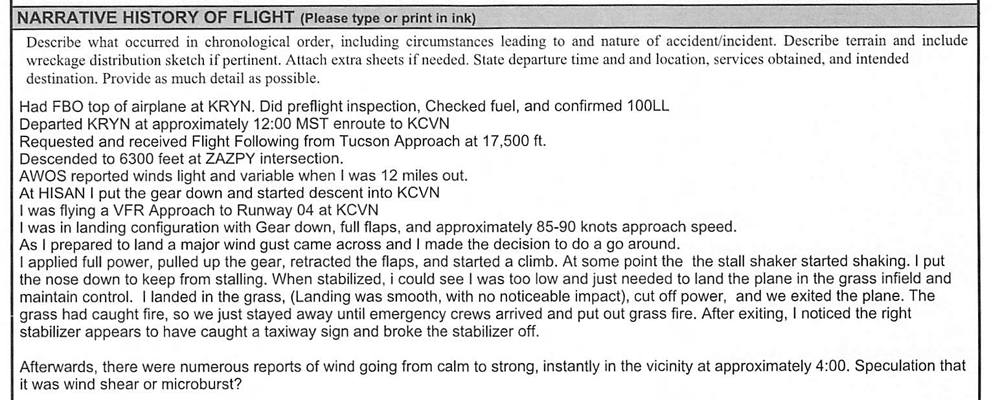
Source: NTSB Supplied Form 6120.1 (Excerpt)
Assuming the NTSB analysis and probable cause findings are correct, we see an example of an accident caused by a failure to follow a procedure precisely. If I were to ask 100 pilots to tell me how to execute a go-around, probably at least 80 of them would say, "power up, gear up, flaps up" without asking what make and model airplane they were flying. In most situations, that procedure would work just fine. But when an unexpected element such as a tailwind is factored in, precisely following the manufacturer's guidance can make the difference between a successful go-around and a broken airplane beside the runway. Always know and follow the procedures for the airplane you are flying today.
Click here to download the accident report from the NTSB website.
Accidents discussed in this section are presented in the hope that pilots can learn from the misfortune of others and perhaps avoid an accident. It is easy to read an accident report and dismiss the cause as carelessness or as a dumb mistake. But let's remember that the accident pilot did not get up in the morning and say, "Gee, I think I'll go have an accident today." Nearly all pilots believe that they are safe. Honest introspection frequently reveals that on some occasion, we might have traveled down that same accident path.
Multiple instances of failure to follow procedures resulted in the crash of a Cessna 414. The crash happened in Texas in June 2024. The 67-year-old, 414-hour private pilot and one passenger were killed while a second passenger was seriously injured.

Accident Airplane
The analysis section of the NTSB report begins: "The pilot was departing on a local flight to check newly installed avionics on the airplane. During takeoff, the airplane lifted off within the performance specifications cited in the airplane flight manual. Shortly after liftoff, the pilot reported to air traffic control (ATC) that he had lost left engine power. The pilot continued the takeoff with the landing gear still extended."
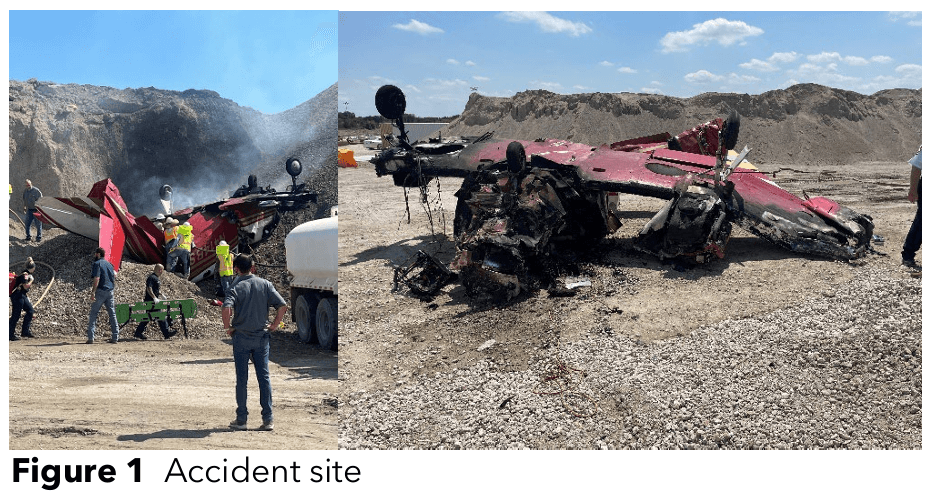
NTSB Supplied Photo
The NTSB report continues: "A witness stated that the airplane seemed to lose left engine power during the takeoff before reaching taxiway B4, and “yawed left quite a bit.” The remaining runway distance from the B4 taxiway to the departure end of the runway was about 2,600 to 2,700 ft. The witness stated that the airplane was not far past the departure end of runway when it began to turn left. As the pilot continued the takeoff and attempted the climb out, ATC instructed the pilot to turn right. The pilot responded that he was going to turn left, which was a turn into the inoperative engine and in the improper direction due to the greater left rolling tendency and increased likelihood of a loss of control. As the flight progressed, the airplane ground speed slowed to the airplane’s air minimum control speed (Vmc) when it rolled left and impacted terrain in an inverted attitude. The airplane was destroyed."

The NTSB report also states: "Postaccident examination of the airplane revealed no mechanical anomalies that would have precluded normal operation. The examination revealed the left engine fuel tank valve was in the Off position, which starved the left engine of fuel, creating a total loss of left engine power. The left engine propeller was not feathered, and the landing gear was extended."
"Although the pilot completed ground and flight training and a proficiency check in the make and model airplane about 4 months before the accident, he failed to ensure proper fuel tank selection, with the fuel selector in the OFF position for the left engine and failed to land on the remaining runway after the loss of left engine power. Following the decision to continue the takeoff, the pilot also failed to follow engine inoperative emergency procedures that would have increased airspeed/climb rate to enable continued flight. The pilot’s actions resulted in a loss of control that led to a Vmc roll and impact with terrain."

NTSB Supplied Photo
The NTSB probable cause states: "The pilot's improper decision to attempt continued flight after a loss of left engine power with usable runway remaining and his subsequent failure to follow the emergency procedures and maintain air minimum control speed, which resulted in a loss of control. Contributing to the accident was the pilot's improper fuel tank selection that resulted in a loss of left engine power due to fuel starvation."

Photo Source: NTSB (Circle showing airplane location added by GB)
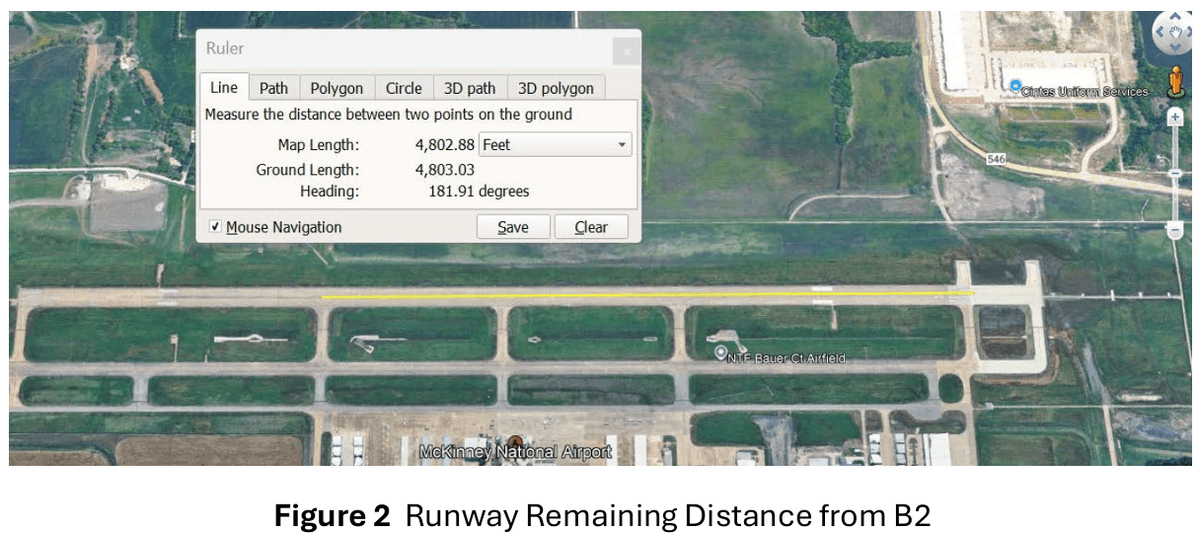
Graphic source: NTSB
Perhaps the first procedure violated here was in failure to perform an adequate pre-takeoff checklist that would have included verifying that the fuel selectors were correctly positioned. Next would be omitting a multiengine airplane takeoff briefing that would include actions to take in the event of an engine failure while still on the runway, airborne but with the landing gear still extended, and airborne with the landing gear in-transit or retracted. Had the pilot taken this simple reminder step, the takeoff could have been easily aborted with runway to spare. Second, a generally agreed upon practice is to avoid turning toward a dead engine. Next, the pilot failed to configure the airplane for single engine operation that would have including retracting the landing gear and feathering the propeller on the inoperative engine. And of primary importance, do not allow the airspeed to deteriorate below Vmc.
The unanswered question here is this. How could a pilot have ground and flight training and a proficiency check in the make and model airplane about 4 months before the accident and make this series of critical errors? There is a major disconnect here somewhere. Please feel free to share your thoughts with me via email at gene@genebenson.com.
Click here to download the accident report from the NTSB website.

Looking for a unique gift for the pilot or aviation enthusiast? Click here to check out my books by visiting my Author Page on Amazon.
Not subscribed to Vectors for Safety yet? Click here to subscribe for free!