
"Essential Vectors" video: Recommended for Review
In support of our topic of the month, please review "Stabilized Approach" in our Essential Vectors Series sponsored by Avemco Insurance. Click here to watch it on YouTube.
"Old Pilot Tips" Recommended for Review
Again in support of our topic this month, please review Episode #21 of our "Old Pilot Tips" series Sponsored by Avemco Insurance. Click here to watch it on YouTube.
It's Fall!
Temps are cooler and there is terrific opportunity to view fall foliage from the air. Check out our video, "Autumn Safety Scenery" sponsored by Avemco, for some reminders on how to be safe. Click here to view the video on YouTube.
Book Your Free Virtual Safety Seminar
Whether your pilot group meets all together, virtually, or hybrid, you can schedule a program, valid for FAA Wings credit, free-of-charge courtesy of Avemco Insurance. Programs are live with Gene Benson and always include a Q&A session at the end. Click here to download our presentation catalog. For more info or to schedule, contact gene@genebenson.com.


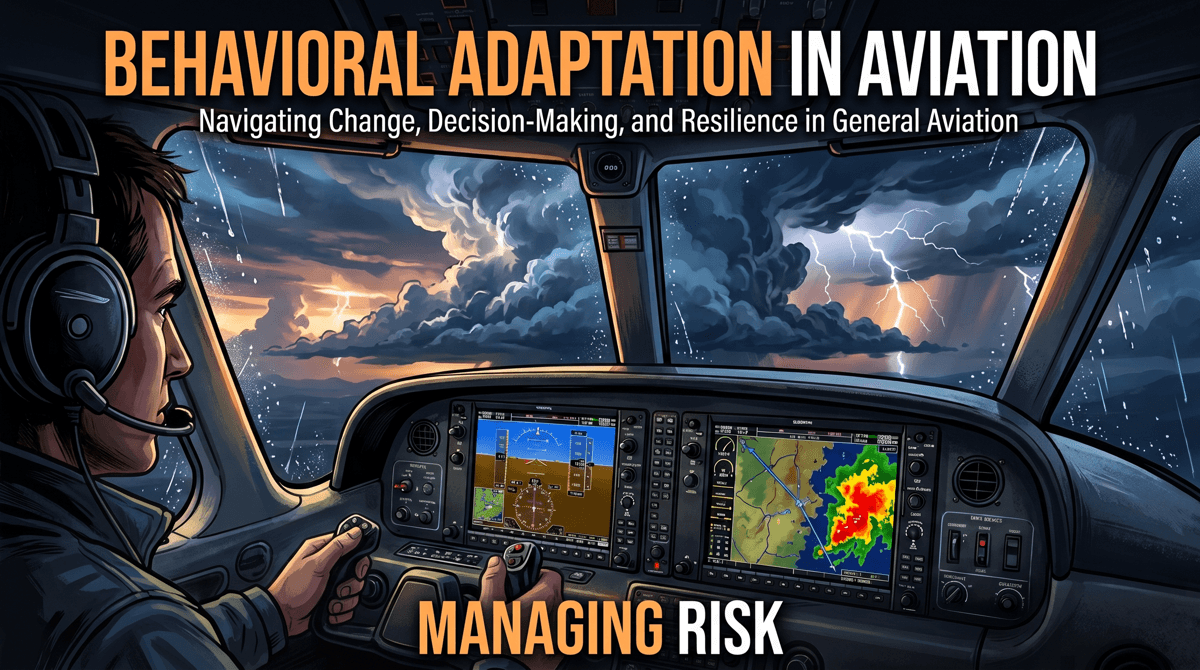
Behavioral Adaptation
Behavioral adaptation is the process by which people change their behavior in response to changes in technology, experience, procedures, environmental conditions, incentives, or perceived risk. In aviation, adaptation is both inevitable and necessary. Pilots constantly adjust to new equipment, changing weather, increased experience, and different operational demands. Most of these adjustments improve safety and efficiency. However, adaptation can also create hidden risks when increased confidence causes a pilot to accept situations that would have previously seemed unacceptable.
A common pattern begins when something changes. A pilot may transition to a more capable aircraft, install advanced avionics, earn an instrument rating, or simply accumulate more flight experience. In response, behavior changes. The pilot may fly farther from suitable airports, accept narrower weather margins, or rely more heavily on automation. If these decisions repeatedly produce successful outcomes, confidence increases and the new behavior gradually becomes routine. Over time, what once felt cautious may begin to feel unnecessarily conservative. The pilot may not recognize that safety margins have slowly eroded because the adaptation occurred incrementally and without immediate consequences.
It is important to recognize that behavioral adaptation is not inherently negative. In fact, many of the most effective safety practices in aviation result from positive adaptation. Pilots often learn from their experiences and adjust their habits accordingly. A pilot who recognizes a tendency to continue unstable approaches may adopt a strict stabilized-approach policy. Another may add formal weather reassessment points during flight planning after encountering marginal conditions. Pilots transitioning to glass cockpits commonly develop new workload-management strategies, while those who experience a close call with weather may establish more conservative personal minimums. Many pilots use simulators to practice unusual attitudes, automation failures, and emergency scenarios precisely because they have adapted their training behavior to address known risks. These examples demonstrate how experience can lead to safer decisions and larger operational margins.
The greater concern arises when adaptation encourages increased acceptance of risk. This often occurs when a pilot perceives that a new capability has reduced danger. The technology itself may genuinely enhance safety, but the behavioral response can consume some of the benefit. For example, pilots equipped with onboard weather displays may be tempted to operate closer to adverse weather because they feel better informed. Modern fuel-management software may encourage some pilots to accept smaller fuel reserves, while confidence in a more capable aircraft may lead to reduced operating margins. Similarly, autopilots have become so reliable that a pilot begins treating them as a substitute for instrument proficiency or continuous flight monitoring.
The critical point is that technology improves information and capability, but it does not eliminate risk. The technology may reduce risk, but if behavior becomes more aggressive in response, much of that safety benefit can disappear.
Closely related to behavioral adaptation is a concept known as normalization of deviance. This describes the gradual acceptance of unsafe practices simply because they have not yet caused an accident or incident. Over time, actions that were once recognized as deviations from established standards begin to feel normal. Aviation research has repeatedly identified this pattern because infrequent accidents can create the illusion that risky behavior is safe. When a shortcut appears to work repeatedly, it becomes easier to justify doing it again.
In general aviation, normalization of deviance may appear in many forms. A pilot may repeatedly depart with less fuel than originally planned because the flight is relatively short. Minor maintenance discrepancies may be accepted because they have never caused a failure. Checklist items may be skipped during familiar operations, weather minimums may be stretched one flight at a time, and unstable approaches may be allowed to continue because previous attempts ended without incident. Bounced landings, rushed departures, or marginal decisions can gradually become viewed as routine rather than as indicators of increased risk. The danger is that successful outcomes do not prove these practices are safe. They may simply indicate that the negative consequences have not yet occurred.
General aviation is particularly susceptible to these effects because many of the organizational safeguards found in airline and corporate operations are absent. The pilot is often the sole decision-maker, operator, and safety manager. There may be no crew member to provide an independent assessment, no formal system to identify developing habits, and little feedback after minor deviations from best practices. Flying frequency can vary considerably, causing proficiency to fluctuate, while low accident rates can reinforce the belief that risky behavior is harmless. The influence of local airport culture, flying clubs, instructors, or even a pilot's own previous experiences can further shape what becomes viewed as acceptable behavior.
One of the most effective defenses against these trends is regular self-evaluation. Pilots should periodically ask themselves a simple question: “What has become easier for me, and has that caused me to accept a risk I previously would have rejected?” This question encourages honest reflection about changing habits and helps identify situations where technology, experience, or familiarity may be leading to unintended increases in risk. It also connects several important safety concepts, including risk compensation, continuation bias, normalization of deviance, technology dependence, and loss of proficiency.
General aviation allows tremendous freedom and flexibility, but those advantages bring significant responsibility. Pilots must continually evaluate their compliance with regulations, reassess personal minimums, maintain proficiency, and guard against the gradual erosion of safety margins. Behavioral adaptation will always occur. The challenge is ensuring that adaptation strengthens safety rather than quietly undermining it. By recognizing how habits develop and by remaining alert to the influence of experience and technology, pilots can make sure their adaptations lead toward safer operations rather than greater risk.
Want to learn more about cognitive science and how it applies to the general aviation pilot? Check out our "Squawking Human" feature!

Stabilized Approach: The Not-Yet-Dead Horse
Yes, I'm writing once again about the importance of flying a stabilized approach. And before anyone reaches for the old cliché about "beating a dead horse," let me offer a defense: this horse isn't dead. In fact, based on my research, it's standing taller than ever.
At first glance, the evidence might seem to suggest otherwise. Search the NTSB's "Probable Cause" database for terms such as stabilized approach or unstabilized approach, and you'll find only a handful of results. That would appear to indicate the problem is rare.
Case closed? Not so fast.
Dig a little deeper. Instead of searching for those exact terms, look at accident reports involving the "Approach" and "Landing" phases of flight and read the probable cause narratives. A very different picture emerges. While investigators may not explicitly use the words unstabilized approach, the descriptions often tell the same story. Again and again, the circumstances point to approaches that failed to meet stabilized approach criteria.
Before going any further, let's do a quick review. Before beginning an approach, we should establish our stabilization altitude, what fighter pilots often refer to as the "hard deck." For most GA operations, that is typically 500 feet above runway elevation, converted to MSL altitude. If any one of the eight stabilized approach criteria is not met at or below that altitude, the approach is no longer considered stabilized. The correct response is immediate and straightforward: execute a go-around or missed approach.
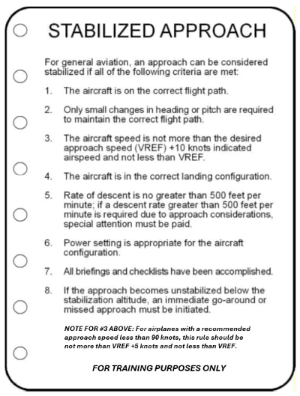
Now consider some of the language commonly found in NTSB accident reports:
"Failure to maintain a proper approach speed..."
"The pilot's failure to attain the runway."
"Failure to obtain the proper touchdown point."
"Failure to maintain clearance from trees while on final approach."
"The pilot's failure to maintain an appropriate glide path."
"The pilot's failure to maintain adequate airspeed during landing, which resulted in an aerodynamic stall."
Sound familiar?
Every one of these findings points to a breakdown in one or more stabilized approach criteria. The terminology may be different, but the message is the same. An unstabilized approach was allowed to continue when a go-around would have been the safer choice.
Even examples that seem unrelated at first glance often trace back to the same issue. Improper runway alignment, inadequate compensation for changing wind conditions, hard landings following an unstable glide path, runway excursions, collisions with obstacles, and even gear-up landings can all be linked to stabilized approach criteria that were not met and not corrected.
The lesson is simple.
Whether you're flying the smallest LSA, a four-seat single, a business jet, a heavy airliner, or anything in between, you should thoroughly understand the stabilized approach concept and its criteria and be committed to using them on every approach. Just as important, you must be completely comfortable executing a go-around or missed approach whenever the situation requires it.
A stabilized approach is more than a procedure. It's a decision-making tool. When we understand the criteria, commit ourselves to following them, and maintain proficiency in go-around procedures, we dramatically reduce the chances of a landing accident.
And that's why this horse isn't dead yet.

Accidents discussed in this section are presented in the hope that pilots can learn from the misfortune of others and perhaps avoid an accident. It is easy to read an accident report and dismiss the cause as carelessness or as a dumb mistake. But let's remember that the accident pilot did not get up in the morning and say, "Gee, I think I'll go have an accident today." Nearly all pilots believe that they are safe. Honest introspection frequently reveals that on some occasion, we might have traveled down that same accident path.
This crash happened in Wisconsin in July of 2023. It involved a Piper PA28-180 which was substantially damaged. The 81-year-old, 526-hour, commercial pilot was seriously injured and his passenger received minor injuries. The NTSB accident report begins: "The pilot reported that during the landing at the destination airport, the airplane floated down the runway, landed long, and did not slow as expected. He continued to apply the brakes as the airplane neared the end of the runway, then felt a gust of wind from the left. The pilot was unable to maintain control and the airplane veered off the right side of the runway. The airplane nosed over in the grass and came to rest inverted which resulted in substantial damage to the right wing and empennage."
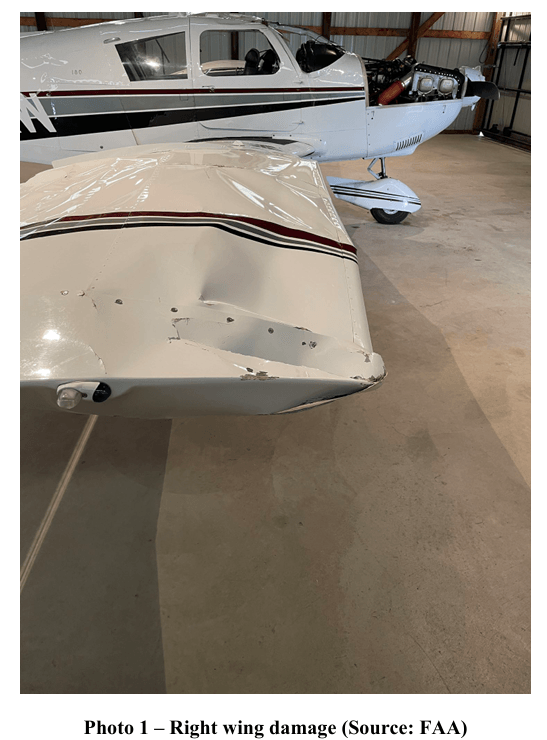
NTSB Supplied Photo
The NTSB report continues: "The pilot reported that there were no mechanical malfunctions or failures with the airplane that would have precluded normal operation and that to prevent the accident he could have landed closer to the threshold of the runway. The responding FAA inspector examined the airplane and found that the throttle was not all the way to idle."
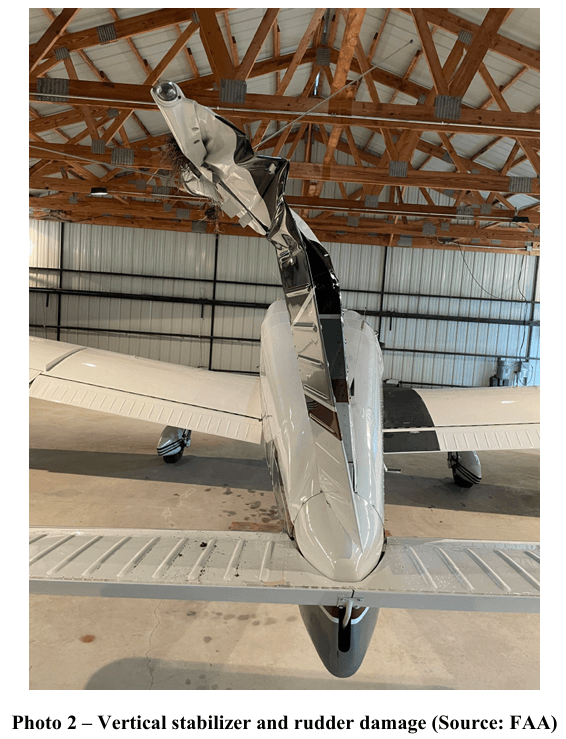
NTSB Supplied Photo
The NTSB probable cause states: "The pilot’s failure to maintain proper airspeed on approach, which resulted in an extended touchdown, loss of control, and runway excursion."
NTSB Supplied Video
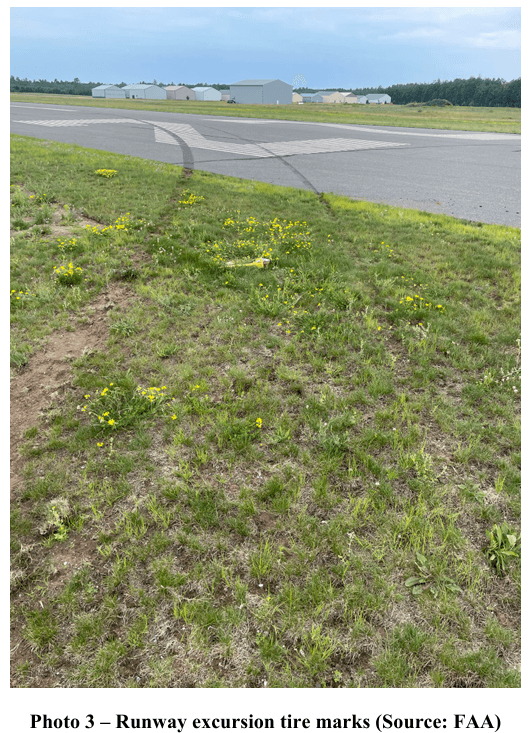
In the NTSB Form 6120.1 the pilot stated that he had landed long and went down an incline at the end of the runway. However, distant and grainy video shows that the airplane landed well past the midpoint of the runway, exited the runway to the right, and flipped over, coming to rest inverted.
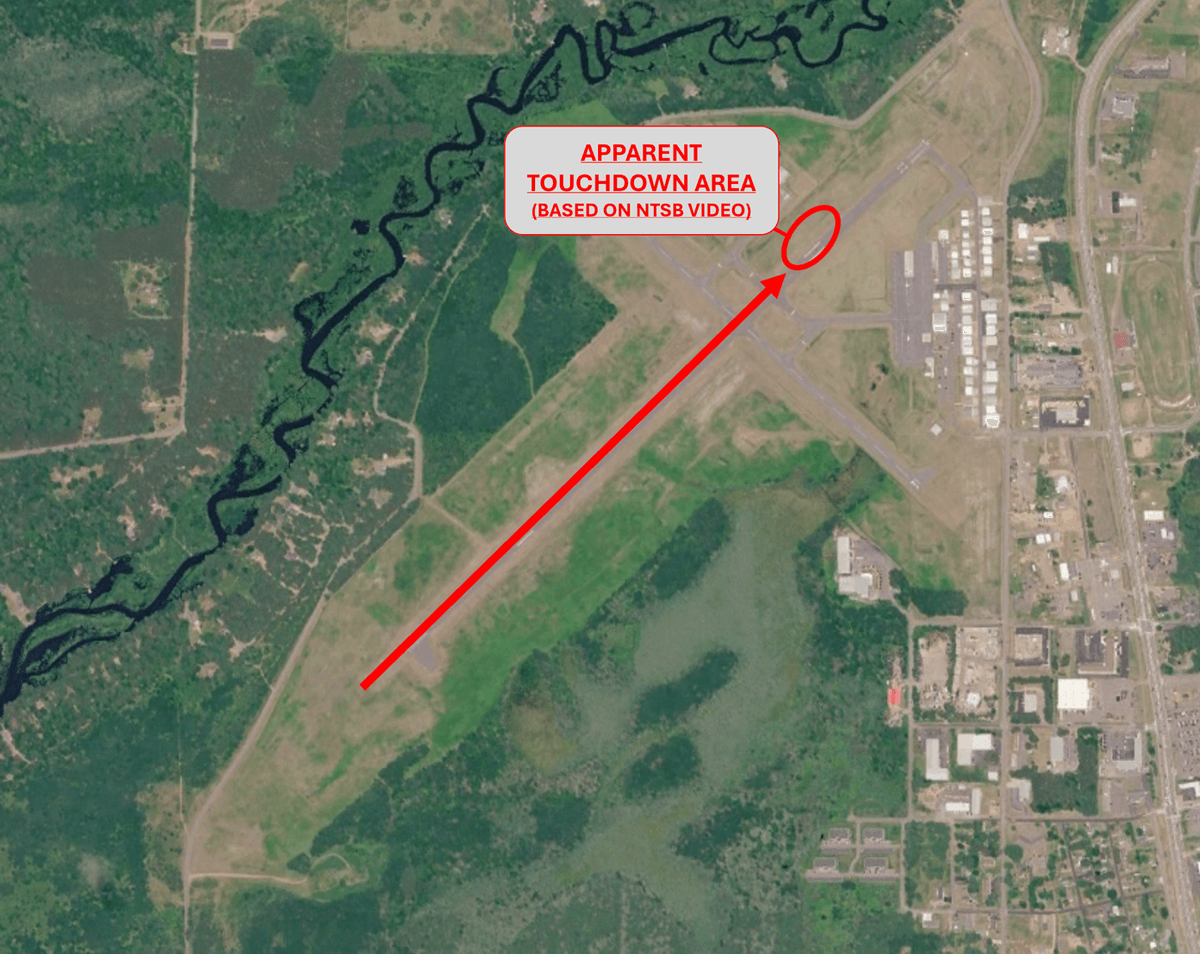
Apparent Touchdown Area Based On NTSB Supplied Video
The first point to make is that this crash happened following an unstabilized approach, but the report does not mention stabilized approach so it is not found when searching under "stabilized approach" or "unstabilized approach." The probable cause states that the pilot did not maintain proper airspeed on the approach. That violates condition #3 on the stabilized approach criteria.
But more important is the lesson that if the airplane is not down before a third of the runway is us, it is time to go around. For a short runway, we might need to be down well before a we have passed the one-third point. But this runway is listed as being 5,000 feet long and the touchdown point appears to be well past the halfway point. Still, the pilot did not run off the end but departed the runway on the right side during heavy braking. A go-around as the first third of the runway was passed would have likely prevented this crash.
Click here to download the accident report from the NTSB website.
Accidents discussed in this section are presented in the hope that pilots can learn from the misfortune of others and perhaps avoid an accident. It is easy to read an accident report and dismiss the cause as carelessness or as a dumb mistake. But let's remember that the accident pilot did not get up in the morning and say, "Gee, I think I'll go have an accident today." Nearly all pilots believe that they are safe. Honest introspection frequently reveals that on some occasion, we might have traveled down that same accident path.
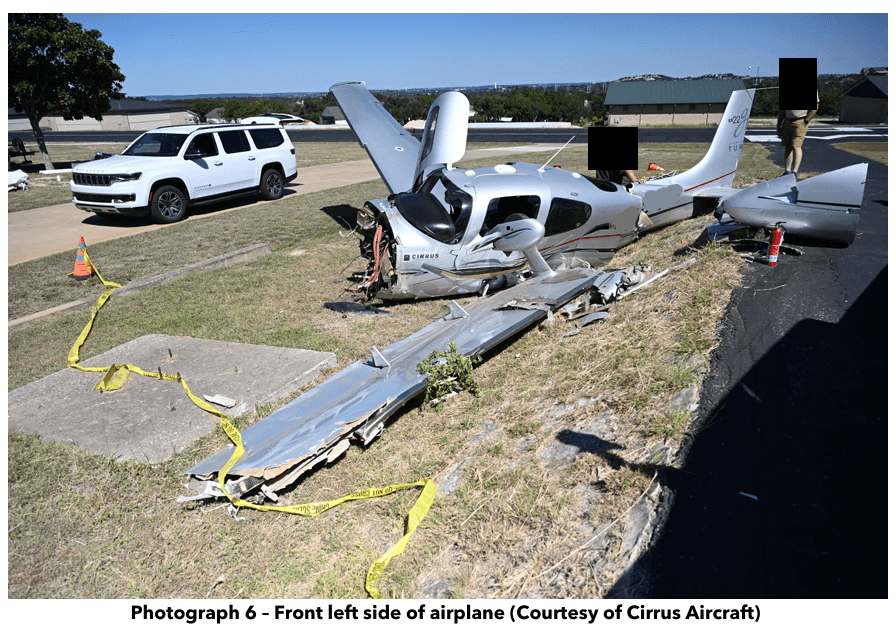
This crash involved a Cirrus SR22 and happened in Texas in September of 2024.The 65-year-old, 526-hour private pilot was seriously injured. The passenger received minor injuries. Both the pilot and the passenger were secured with 4-point restraints.
NTSB Supplied Photo
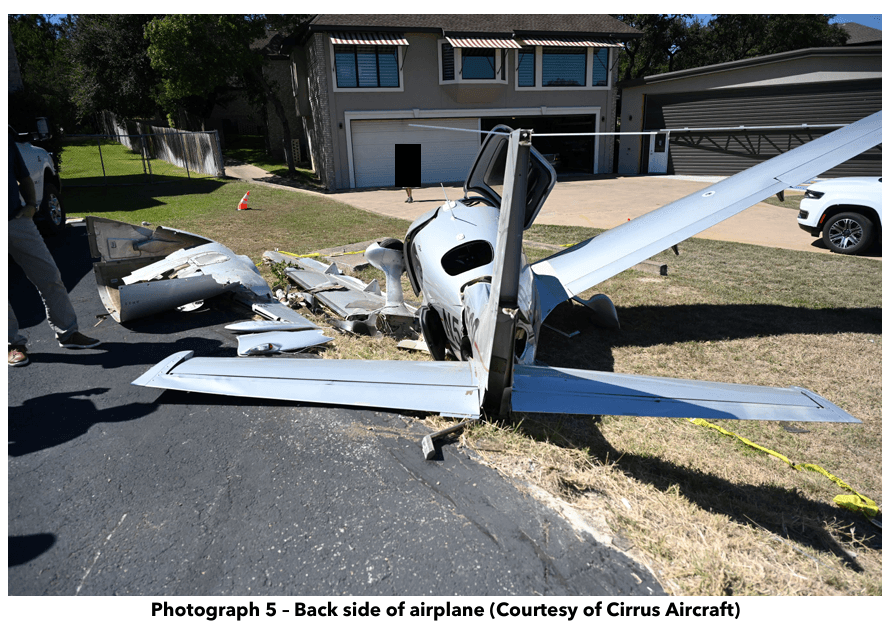
The NTSB accident report begins: "During descent to the destination airport, the pilot confirmed that the closest weather station reported the wind from 030° at 10 knots, gusting to 16 knots, so he planned to land on runway 34. While on the base leg of the traffic pattern, he extended the flaps to 100%, reduced the engine power, and slowed to 85 knots indicated airspeed (KIAS). While on final approach and after clearing a set of powerlines that were perpendicular to the runway, he made a steep approach to the runway. As the airplane was above the displaced threshold, the airspeed decreased to about 63 KIAS, entered an aerodynamic stall, and landed hard on the runway. As the airplane bounced, the pilot increased engine power to go around, then lost control, veered off the left side of the runway and impacted a tree and terrain. The airplane sustained substantial damage to the fuselage, wings, and engine mount."
NTSB Supplied Photo
The NTSB report continues: "Postaccident examination of the runway revealed three distinct gouges where the landing gear impacted during the hard, bounced landing. The pilot reported that there were no preaccident mechanical malfunctions or failures that would have precluded normal operation."
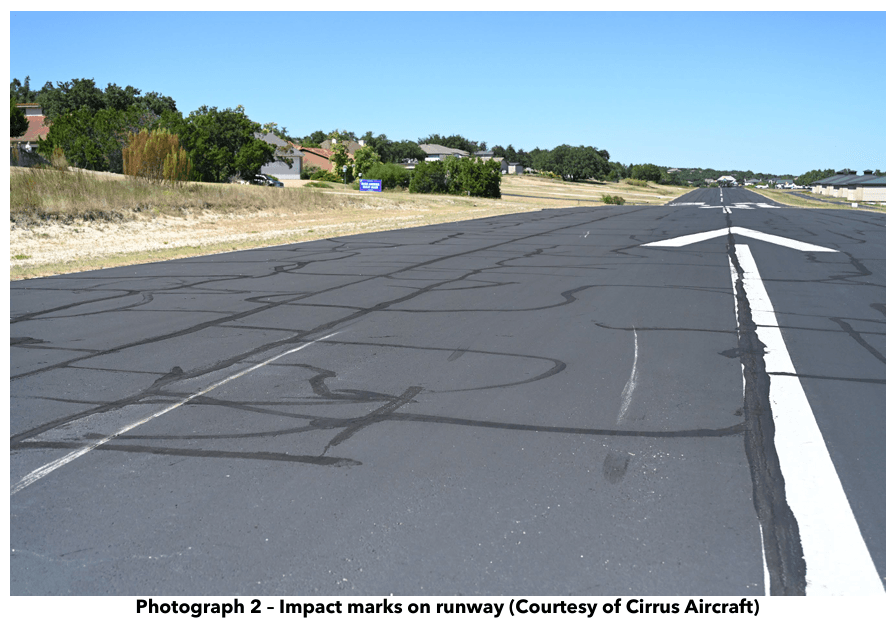
NTSB Supplied Photo
The NTSB probable cause states: "The pilot’s failure to maintain adequate airspeed during landing, which resulted in an aerodynamic stall and loss of control during a go-around."
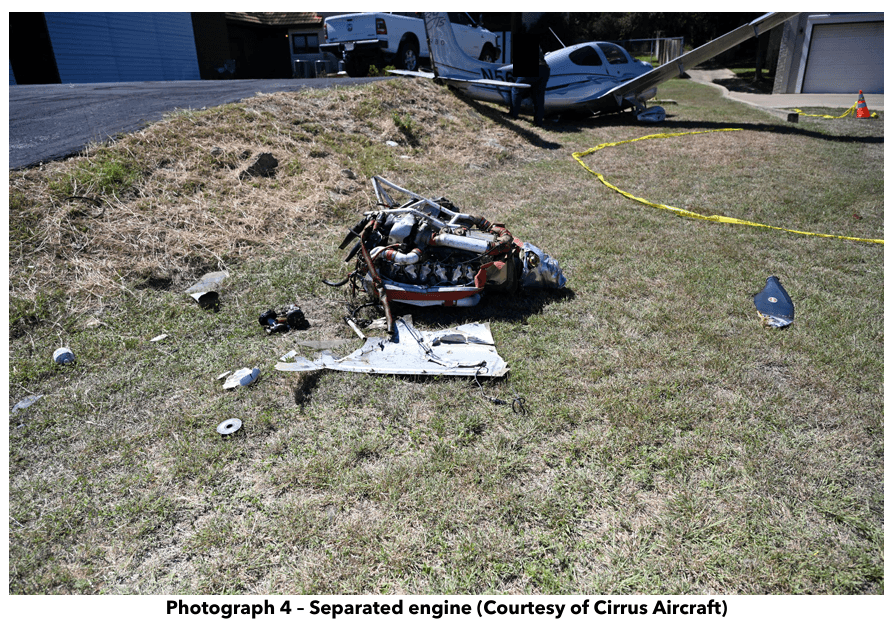
NTSB Supplied Photo
Again, we see a crash that is not cataloged with any reference to a stabilized approach. Failure to maintain adequate airspeed, violation of condition #3 of stabilized approach criteria is stated in the probable cause finding. Also, staying high above powerlines and then descending steeply violates conditions #1 and #2.
Last month we discussed bounced landings in detail. In this crash, the pilot bounced and attempted a go-around but lost control and veered to the left side of the runway. This appears to be a developing pattern in high-horsepower airplanes. The sudden application of full power when in a low airspeed, near-stall, and high AOA condition, produces strong left turning tendencies which require substantial right rudder deflection to counteract. My recommendation is for anyone flying or planning to fly a high-horsepower airplane duplicate this situation at a safe altitude. The first time experiencing the amount of rudder deflection necessary is best experienced not while in a bounced landing a few feet above the surface.
Click here to download the accident report from the NTSB website.
Accidents discussed in this section are presented in the hope that pilots can learn from the misfortune of others and perhaps avoid an accident. It is easy to read an accident report and dismiss the cause as carelessness or as a dumb mistake. But let's remember that the accident pilot did not get up in the morning and say, "Gee, I think I'll go have an accident today." Nearly all pilots believe that they are safe. Honest introspection frequently reveals that on some occasion, we might have traveled down that same accident path.
For more than two decades now I have devoted much time to reading and analyzing airplane crashes. After studying thousands of crashes spanning the spectrum of severity, there is not much that surprises me. But this crash evoked a response usually expected in a text from a grandchild, "OMG!"
I pay particular attention to the crashes that had a flight instructor aboard, and yes, there are too many of them. But the majority of those come from either the CFI's inattention or failure to intervene in a timely manner. But this one, well, let's just say, "OMG!"
The crash involved a Cirrus SR22T and happened in Paso Robles, California in April of 2024. The CFI received only minor injuries while the pilot receiving instruction was seriously injured.
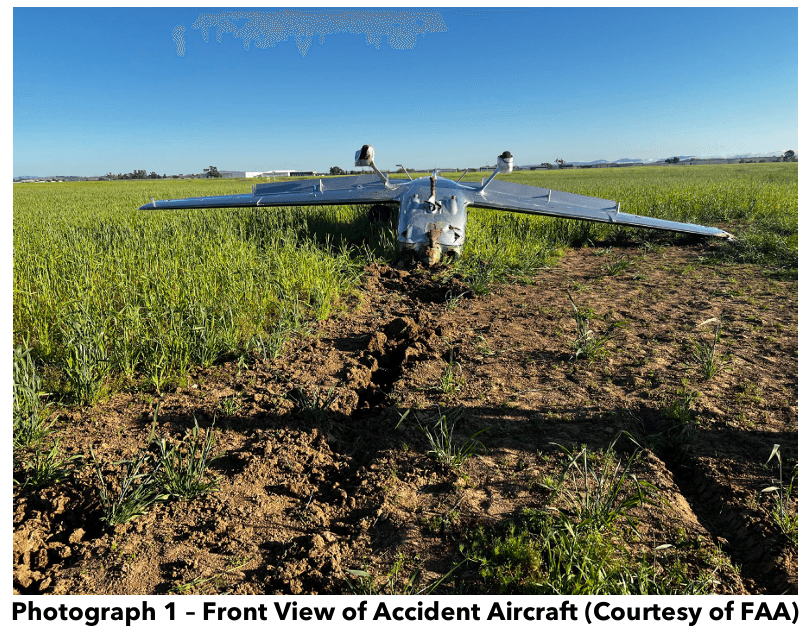
NTSB Supplied Photo
The analysis section of the NTSB report states: "The pilot receiving instruction reported that while on short final approach, he recognized that he was aligned with the wrong runway. The flight instructor took control of the aircraft and banked hard to the right in an attempt to land on the runway which they were cleared to land. Almost immediately the stall warning sounded, the flight instructor applied throttle and attempted to level the aircraft. The landing gear contacted the runway, the airplane continued across the runway into a field and came to rest inverted. The pilot receiving instruction sustained serious injury and the airplane sustained substantial damage to the fuselage. The pilot reported no pre-impact mechanical malfunctions or failures with the airplane that would have precluded normal operation."
We must note that though the NTSB uses the term "cleared to land" the airport is non-towered so there was landing clearance provided nor was one necessary.
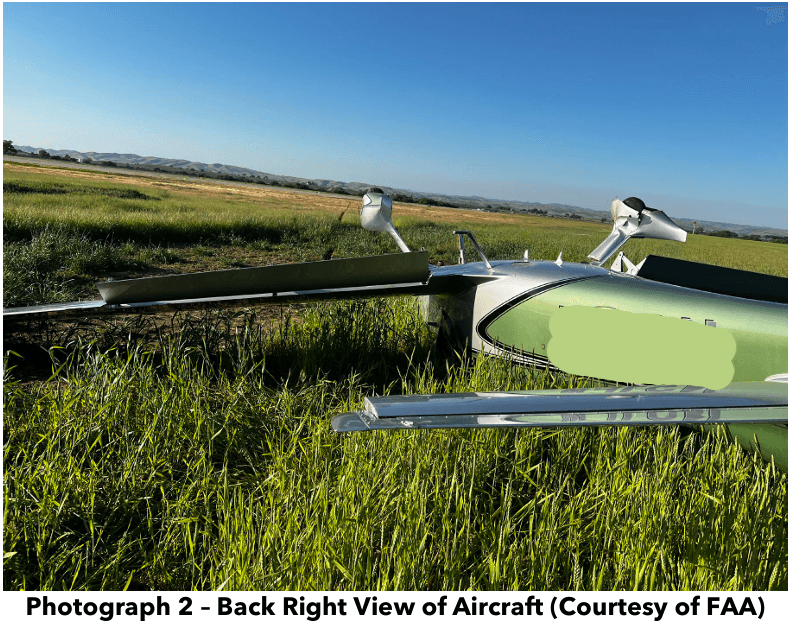
NTSB Supplied Photo
The 270 hour, age 50, private pilot receiving instruction had all of his flight time in the in the same make and model. He reported having 106 hours PIC and was presently working toward an instrument rating.
The 23-year-old Commercial, CFI had 438 hours total flight time including 152 hours PIC and 114 hours in this make and model.
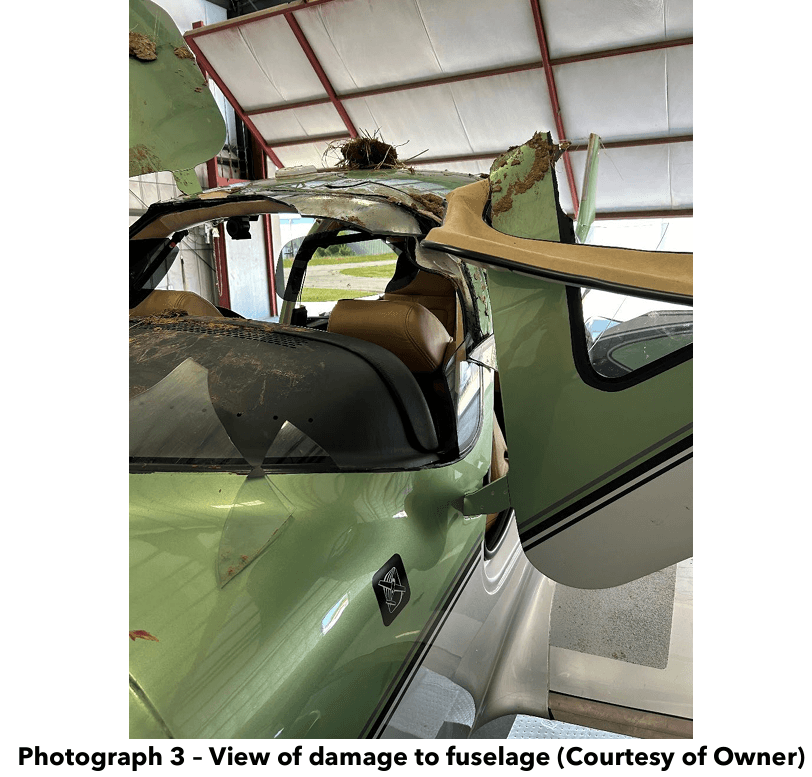
NTSB Supplied Photo
The NTSB probable cause states: "The flight instructor’s failure to maintain adequate airspeed during landing which resulted in a loss of directional control and runway excursion. Contributing to the accident was the pilot receiving instructions failure to maintain runway alignment."
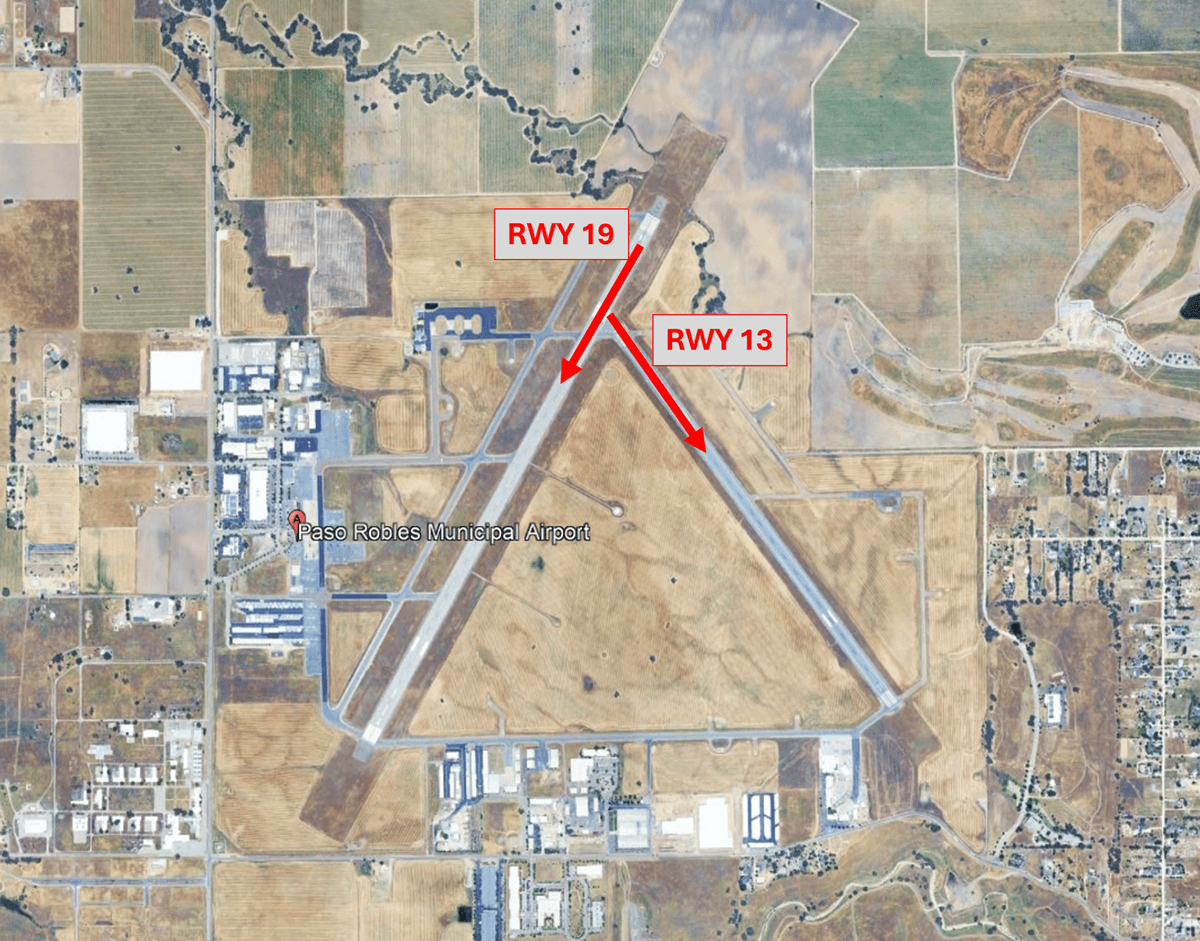
Google Earth Annotated by GB
The real issue here is that the airplane was apparently on a stabilized approach to one runway and a sudden turn was made to align with a different runway. That procedure totally violates the premise of the stabilized approach. Condition #1 of the stabilized approach criteria requires that the airplane be on the correct flight path. As soon as it becomes known that the airplane is no longer on the correct flight path, an immediate go-around is indicated. A CFI either initiating or condoning a turn to a different runway at a low altitude is ______________. You fill in the blank.
Click here to download the accident report from the NTSB website.
Not subscribed to Vectors for Safety yet? Click here to subscribe for free!