
New Virtual Presentation Program Available
"Landing with Confidence" is a dynamic, one-hour recurrent training session designed for pilots who already know how to land well—but want to land even better. It is valid for 1 Credit, Advanced Knowledge Topic 2 in the Wings program. This and many other virtual programs are available to pilot groups, flying clubs, EAA Chapters, CAP squadrons, etc. free of charge courtesy of Avemco Insurance. Click here to download our current presentation catalog. For questions or to schedule, please contact gene@genebenson.com.
Recommended Viewing: "The Power Curve"
This "Oldie but Goodie" video Takes a dive into a frequently misunderstood but very important concept. It is well worth the 5 1/2 minutes of viewing time. Click here to see the video on YouTube.


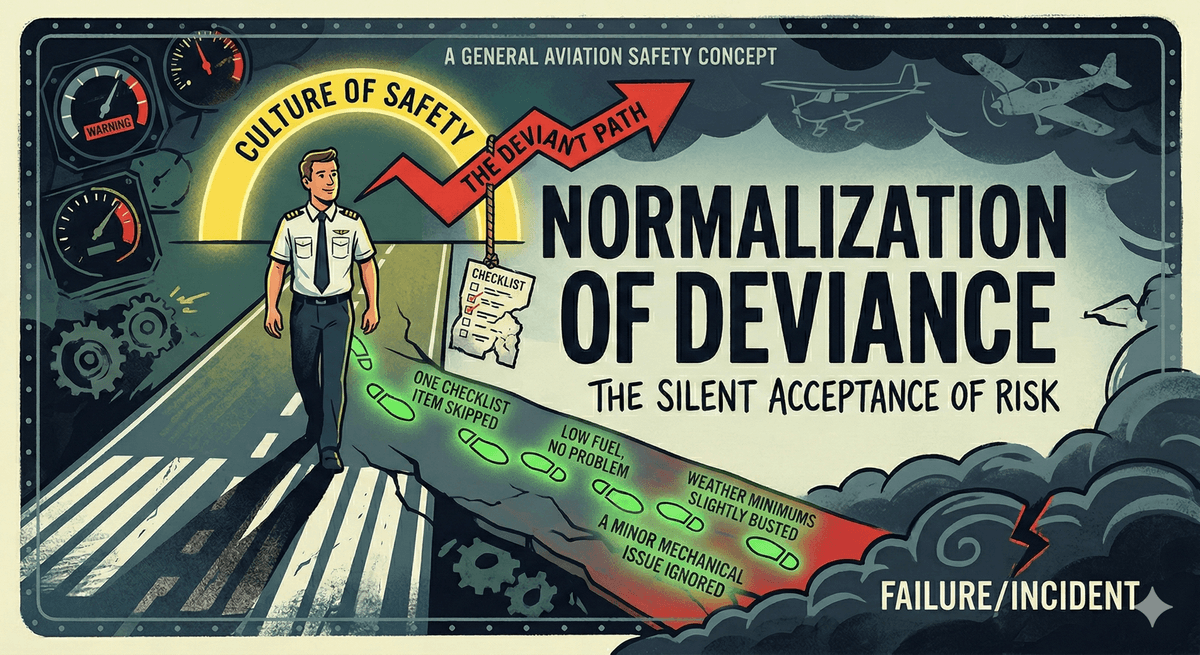
The Cognitive Science of "Normalizing Deviance"
In 1986, the Space Shuttle Challenger disintegrated 73 seconds into its flight. The technical cause was a failed O-ring seal, but the sociological cause was something far more subtle and dangerous: the normalization of deviance.
Coined by sociologist Diane Vaughan, this term describes the process where a clearly dangerous or "deviant" practice becomes so commonplace that it is accepted as the standard operating procedure. It isn’t a result of malice or laziness; it is a predictable byproduct of how the human brain processes risk and efficiency.
To understand why we allow standards to slip, we have to look at how our brains handle repetitive tasks. We are biologically wired for cognitive economy. Constant vigilance is "expensive"—it consumes massive amounts of glucose and mental energy.
When we first encounter a safety rule or a standard, our brain treats it with high priority. However, if we "break" that rule once (perhaps out of necessity or a time crunch) and nothing bad happens, our brain receives a powerful reinforcement signal. We achieved the goal faster or with less effort, and there was no immediate penalty.
The most significant cognitive driver is the lack of negative feedback. In a high-risk environment, "success" is often the absence of a disaster.
If a pilot ignores a minor pre-flight check and the flight lands safely, the brain doesn't see a "near miss"; it sees a "successful shortcut." Over time, this creates a shifting baseline. The deviation is no longer seen as a risk, but as a new, more efficient "normal."

Luck is a Dangerous Teacher
Does this sound familiar? The crosswind was gusting just past your personal limits, or the fuel gauges were looking a bit lower than you’d liked, but you pushed on. You landed safely, tied down the plane, and thought, “See? I’m a great pilot. I handled that like a pro.”
But here’s the uncomfortable truth: You didn’t necessarily make a good decision; you just had a good outcome. In aviation, mistaking luck for skill is called Outcome Bias, and it’s the first step toward a silent killer known as the Normalization of Deviance.
This reinforcement leads directly to the Normalization of Deviance. This is a process where skipping a step—like failing to sump fuel or "scud-running" under a low ceiling—stops feeling like a risk and starts feeling like "the way we do things."
In GA this is especially dangerous because we don't have "Big Brother" watching. Unlike airline pilots, who have flight data monitors and Chief Pilots to catch their procedural drifts, GA pilots are often their own Safety Officers. If you skip a checklist and nothing bad happens, your brain records a "win." You’ve successfully moved the goalposts of safety, making it easier to skip that step next time. The more times you survive a bad decision, the more likely you are to repeat it, because your brain has "proven" the danger isn't real.
How do we fight a brain wired to value results over safety? It requires a brutal level of honesty during your post-flight walk-away.
● Debrief the Process, Not the Landing: Don't ask, "Did I land safely?" Ask, "Did I follow my plan and my minimums?" If you broke a personal rule and still landed safely, treat that flight as a failure of judgment, not a success.
● Acknowledge Luck: If you "pushed it" and survived, be honest enough to admit you got lucky. Luck is a finite resource; skill is built on discipline.
● External Accountability: Share your "close calls" or questionable decisions with a flight instructor or a trusted flying buddy. Getting an objective perspective can snap you out of the "it's fine" mindset.
The best pilots aren't the ones who can handle the sketchiest situations; they are the ones with the discipline to never end up in them. Next time you tie down after a flight where you "got away with one," don't pat yourself on the back. Sit in the cockpit for a minute and realize that you just used up one of your "nine lives"—and then decide how to never need it again.

Accidents discussed in this section are presented in the hope that pilots can learn from the misfortune of others and perhaps avoid an accident. It is easy to read an accident report and dismiss the cause as carelessness or as a dumb mistake. But let's remember that the accident pilot did not get up in the morning and say, "Gee, I think I'll go have an accident today." Nearly all pilots believe that they are safe. Honest introspection frequently reveals that on some occasion, we might have traveled down that same accident path.
This mishap involved a Diamond DA42 NG. It happened in Florida in November or 2024. It was a repositioning flight with two flight instructors aboard. Refreshingly, the flight instructors had no culpability in this accident that involved a landing gear malfunction.
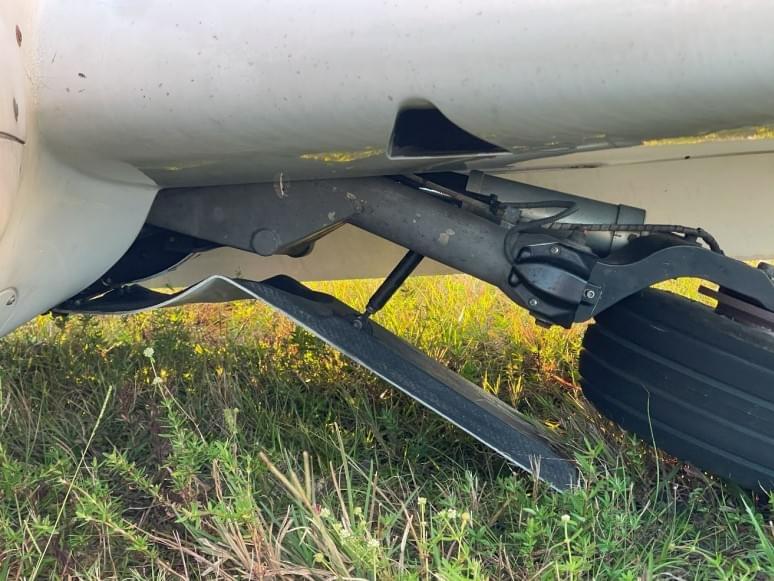
NTSB Photo
The NTSB report includes the following: "While on approach during a repositioning flight, the pilot selected the landing gear to the down position. The right main landing gear failed to extend and after multiple attempts to get the gear to extend, the pilot made the decision to land with the right main gear up. Video of the accident showed a smooth landing on the left main and nose with the right wing settling to the runway. The airplane exited the right side of the runway, and the right wing struck a runway light and a taxiway sign. Upon contact with the sign, the video showed the right main landing gear falling out of the wheel well. The runway excursion resulted in substantial damage to the right wing."
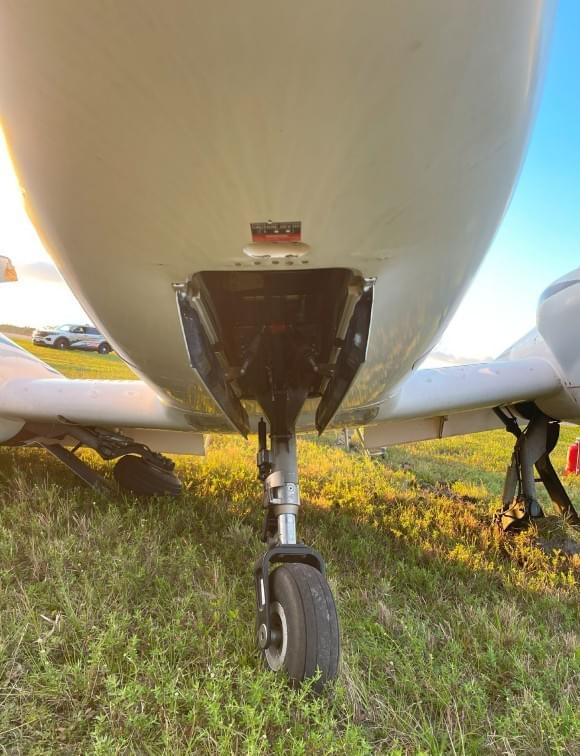
NTSB Photo
The NTSB report continues: "An examination of the maintenance records found that prior to the accident flight, the right main wheel and tire were replaced. When the gear was retracted during the landing gear examination, the tire contacted the outer diameter of the wheel well cutout and the hydraulic system forced it into the well. When selected down, the right main landing gear became stuck on the wheel well cutout and was unable to be extended. Measurement of the tire and four others of the same make, model, and size showed the diameter of the tire to be 0.5 inches larger than the recommended tire. The landing gear was tested with the manufacturer’s recommended tire and the landing gear extended and retracted normally with no binding."
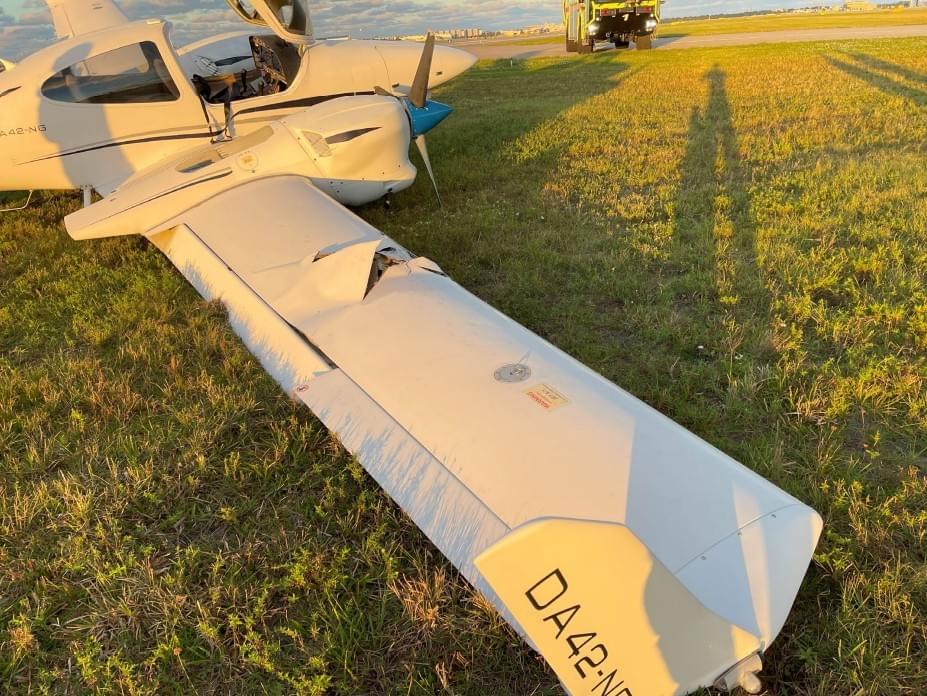
NTSB Photo
The NTSB report continues further: "Review of the maintenance manual found that the minimum clearance of the tire to the outer diameter of the wheel well was 4 millimeters. With the tire used, having a larger tread radius, this exceeded the 4-millimeter threshold and caused the tire to get stuck. The maintenance manual procedure for replacement of a wheel and tire required that the landing gear be retracted and adjusted for this tolerance on every tire change. The technician who changed the tire reported that he did not perform the landing gear retraction and adjustment after changing the tire."
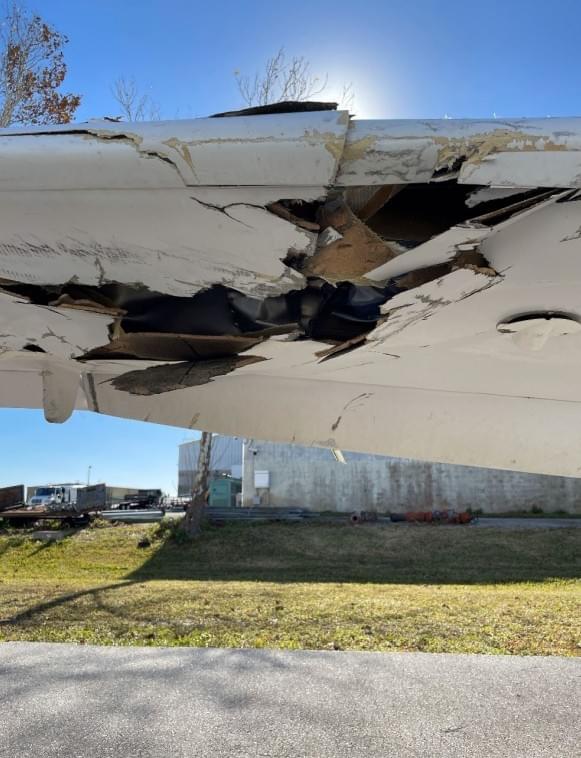
NTSB Photo
The NTSB Probable Cause states: "The maintenance technician’s failure to follow the manufacturer’s recommended procedures during a wheel and tire change to ensure proper clearance of the tire to the wheel well resulting in the right main wheel becoming stuck in the well and subsequent partial gear extension landing."
This is where I usually provide some ways for pilots to avoid the accident described. Typically, I would tell pilots to choose their maintenance providers carefully. But this was a flight school airplane and the CFIs were not in a position to choose their maintenance providers. I can relate since I had a similar situation in my first full-time instructing job at a large flight school. I also had a maintenance-related landing gear issue in flight with a student, but we were finally able to get it down and locked and landed without incident.
I included this accident because it possibly illustrates normalization of deviance in the maintenance organization or at least on behalf of the mechanic who performed the tire change. Was this the first time that a tire had been changed and the gear swing had not been performed? If not, each time the gear swing had was skipped and nothing bad happened, the belief that it was not necessary was strengthened.
Whether dealing with pilots, technicians, surgeons, electricians, ship captains, or any other folks operating in a high-stakes environment, the procedures have been established for a reason. It is good to question them in the interest of understanding or making them better, but they should never be ignored due to expediency.
Click here to download the accident report from the NTSB website.
Accidents discussed in this section are presented in the hope that pilots can learn from the misfortune of others and perhaps avoid an accident. It is easy to read an accident report and dismiss the cause as carelessness or as a dumb mistake. But let's remember that the accident pilot did not get up in the morning and say, "Gee, I think I'll go have an accident today." Nearly all pilots believe that they are safe. Honest introspection frequently reveals that on some occasion, we might have traveled down that same accident path.
This crash involved a Beechcraft C-99. It occurred in Michigan in August, 2023. The 1218-hour, age-27, commercial pilot and sole occupant escaped with only minor injuries. The airplane sustained substantial damage. The NTSB report begins as follows: "The pilot reported that after a normal start and taxi, the airplane was cleared for takeoff. During the takeoff roll, the airplane drifted right and the pilot corrected with the left rudder. When the airplane reached 100 knots, he rotated the airplane, and about 30 feet in altitude, the airplane experienced a roll to the right. The pilot tried to correct the roll with left rudder but was unable to provide sufficient left rudder. At this point, the airplane had drifted to the right of the runway and over the adjacent parallel taxiway. He was able to regain partial control by reducing engine power and banking the airplane to the left. The pilot attempted to land on the taxiway but was unable to judge his height above ground due to the low visibility, and subsequently impacted terrain to the right of the taxiway. Both wings and the fuselage sustained substantial damage. Prior to exiting the airplane, the pilot noted that the rudder trim was set to the full nose-right position. The pilot reported no preaccident mechanical malfunctions or failures with the airplane that would have precluded normal operation."
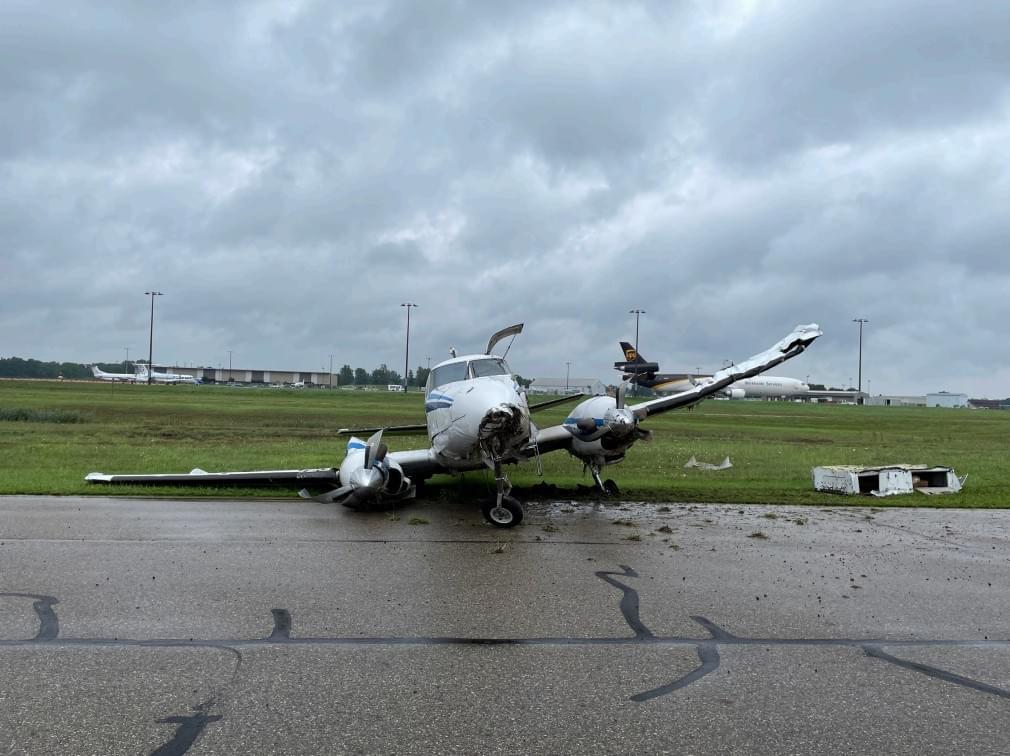
NTSB Photo
The NTSB report continues: "Prior to the accident, maintenance was completed that consisted of an “Event II & Routine” inspection. The inspection procedure required the rudder trim system to be lubricated, a trim tab free play inspection, and an operational check prior to returning the airplane to service. Review of the maintenance procedures revealed there was no guidance on returning the rudder trim control system back to a neutral position at completion of the inspection."
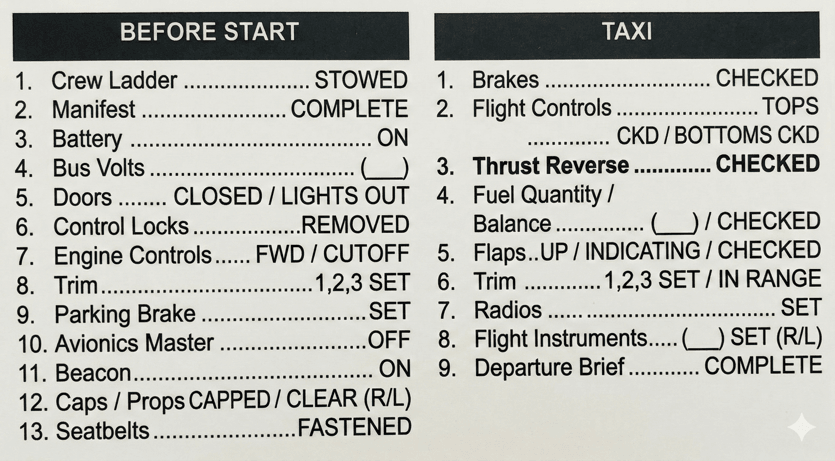
Source: NTSB accident docket, CEN23LA363 Beechcraft C-99 Checklist Images
In the image above, the "Trim........1,2,3 SET" refers to the elevator, aileron, and rudder trim. Note that the trim settings are to be checked twice, once during the Before Start Checklist and once during the Taxi checklist.
The NTSB probable cause states: "The pilot’s failure to properly set the rudder trim position which resulted in a loss of directional control during takeoff. Contributing was the pilot’s inadequate checklist procedures prior to takeoff."
How many times had the pilot checked the trim settings per the checklists and found them to be already set correctly? Perhaps he had skipped the trim checks previously since they had never needed adjustment before. If this is true, normalization of deviance may have taken its toll on this flight.
Click here to download the accident report from the NTSB website.
Accidents discussed in this section are presented in the hope that pilots can learn from the misfortune of others and perhaps avoid an accident. It is easy to read an accident report and dismiss the cause as carelessness or as a dumb mistake. But let's remember that the accident pilot did not get up in the morning and say, "Gee, I think I'll go have an accident today." Nearly all pilots believe that they are safe. Honest introspection frequently reveals that on some occasion, we might have traveled down that same accident path.
This crash involved a Piper PA28-140 with four people aboard, operating at or somewhat above the maximum allowable gross weight, attempting a takeoff at a density altitude of about 6,035 feet. It happened in Montana in August of 2020. All four occupants escaped with minor injuries, but the airplane was substantially damaged. The 61-year-old private pilot had 600 hours total flight time, all of which was in this make and model.
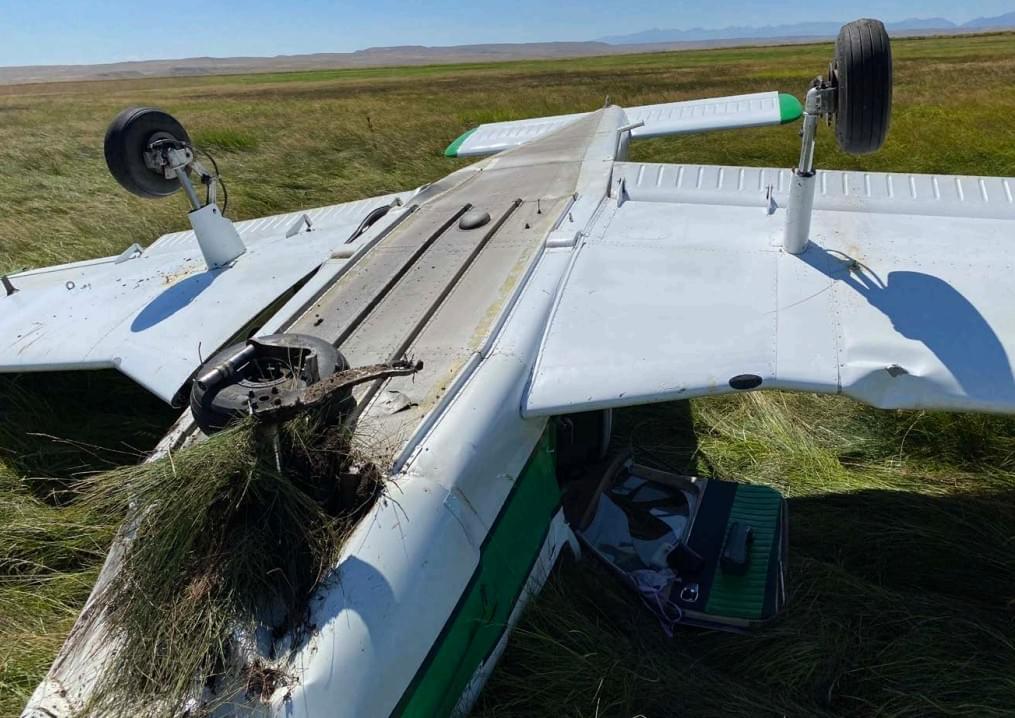
NTSB Photo
The NTSB accident report includes the following: "The pilot conducted a short-field takeoff in high density altitude conditions, with the airplane close to, or slightly above its maximum gross weight. During the initial climb, the airplane accelerated to best rate-of-climb speed, but it descended back to the ground, collided with a fence, and nosed over.
In the days leading up to the flight, the pilot had expressed concern that the engine was not producing maximum power, so he had it examined by an airframe and powerplant mechanic. The mechanic stated that both the engine and tachometer were operating appropriately.
The pilot told investigators that it was his habit to take his hand off the throttle during takeoffs and place both hands on the yoke. Postaccident examination revealed that the, throttle was found slightly aft of the full-forward position, the carburetor heat control was partially backed out, and the flaps were extended. It is likely the throttle backed out during takeoff and engine performance was further reduced by the carburetor heat control being partially backed out. Additionally, the airplane procedures for a short field-takeoff called for the slow retraction of the flaps after takeoff."
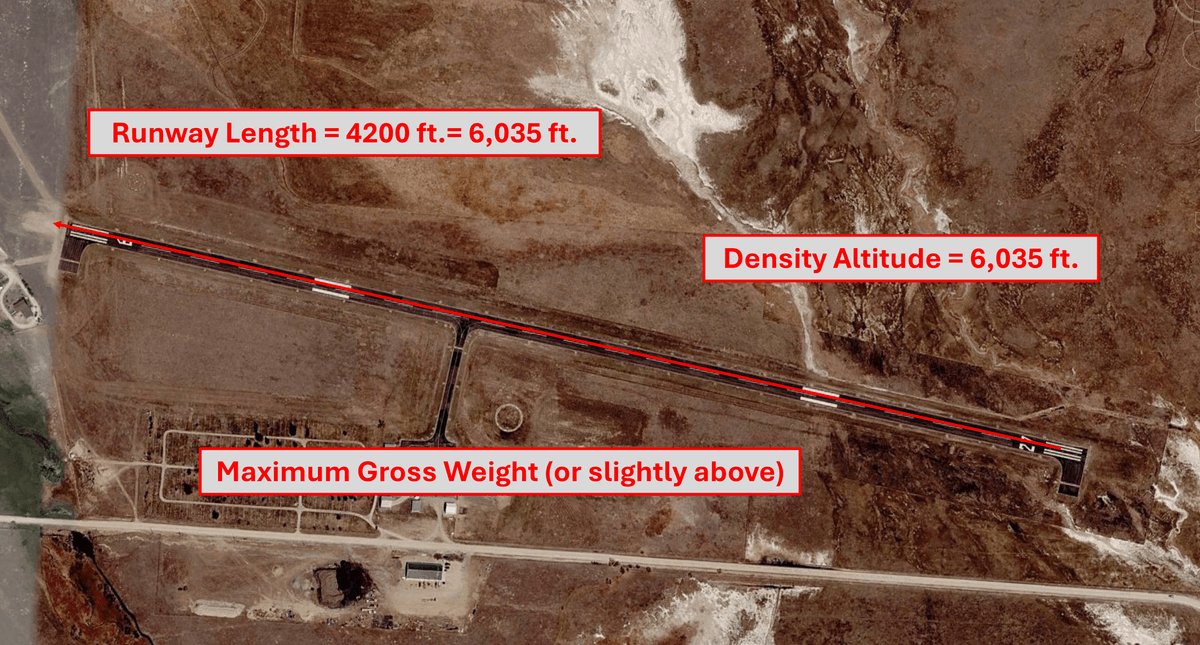
Google Earth image annotated by GB
The NTSB report also includes: "The circumstances of the accident are consistent with a loss of climb performance occurring after a heavyweight, high density altitude takeoff due the pilot’s failure to properly set and monitor the engine controls and retract the flaps as required."
The NTSB probable cause states: "The pilot’s failure to follow the appropriate takeoff procedures, which resulted in a collision with terrain."
Most pilots have been told and reminded (a couple of my students have had their hand slapped) that a hand must be on the throttle during takeoff and landing. To state the obvious, we want to avoid having the throttle creep out thereby reducing engine power output and we want to be spring loaded to go around in the case of landing or to abort in the case of executing a taking off. The pilot stated that his procedure was to have both hands on the yoke during takeoff. I can say with reasonable certainty that is not how he had been taught. This is likely a prime example of normalization of deviance. Fail to follow a procedure and nothing bad happens, until it does.
Episode #17 of my "Old Pilot Tips" series is titled, "Hand on Throttle." Click here to check it out on YouTube.
Click here to download the accident report from the NTSB website.
Not subscribed to Vectors for Safety yet? Click here to subscribe for free!